
Mykyta Hryhorenko
CEO & Co-founder
What Is AI Max for Search?
Google announced AI Max for Search at Google Marketing Live in 2025, and by Q3 it rolled out globally to all advertisers. It's not a new campaign type — that's the first thing to understand. AI Max is an optimization layer you enable within an existing Search campaign. You're not rebuilding anything. You're adding intelligence on top of what's already running.
The idea is straightforward: your current Search campaigns already have keywords, ads, and landing pages. AI Max takes all of that as a foundation and lets Google's AI do three additional things — find more relevant searches, write better ad copy in real time, and send users to the most appropriate page on your site based on their specific query. Your campaign structure stays intact. Your bids, your ad groups, your negative keywords — all of it remains. You're just extending what the AI can do within those boundaries.
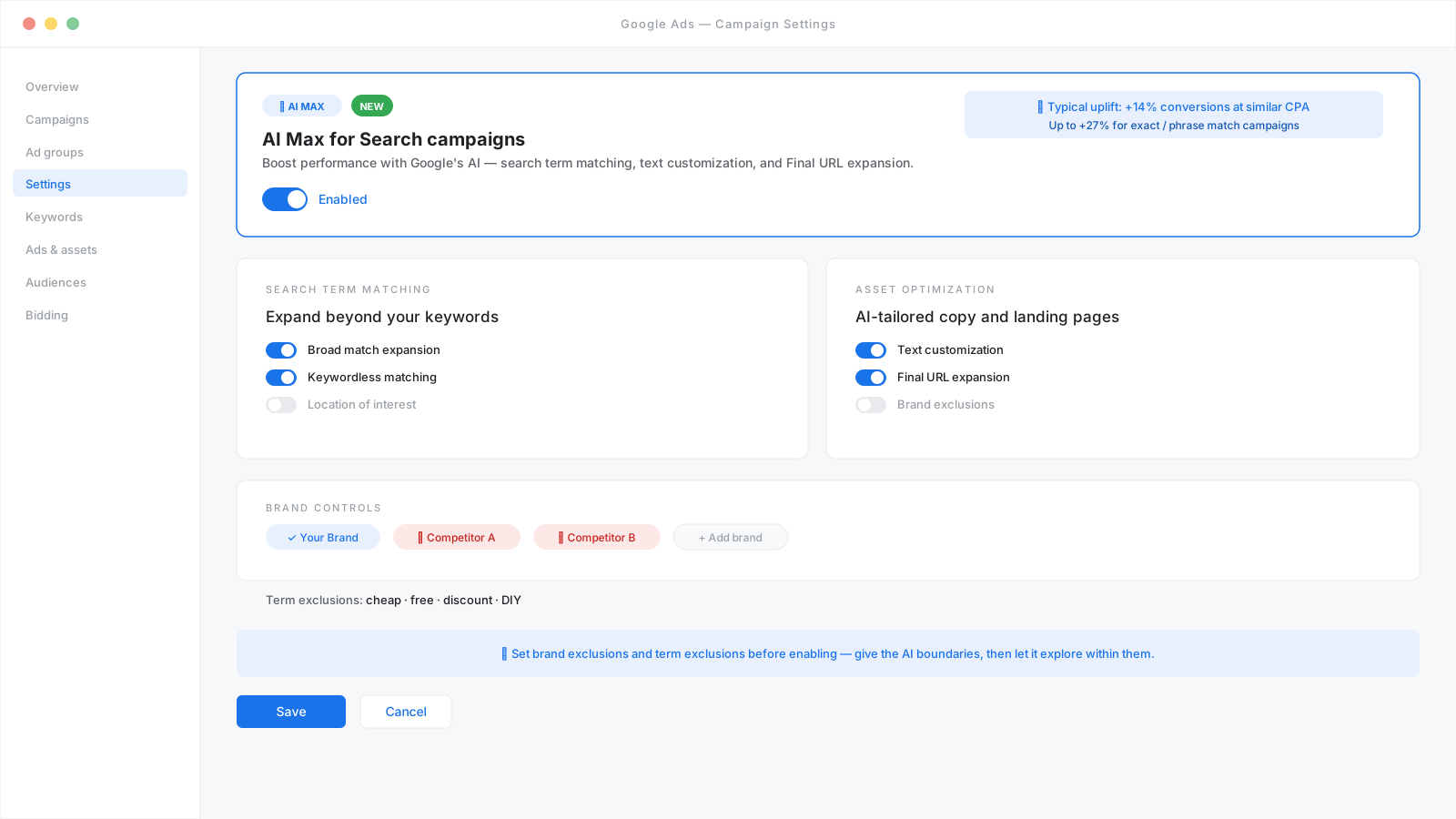
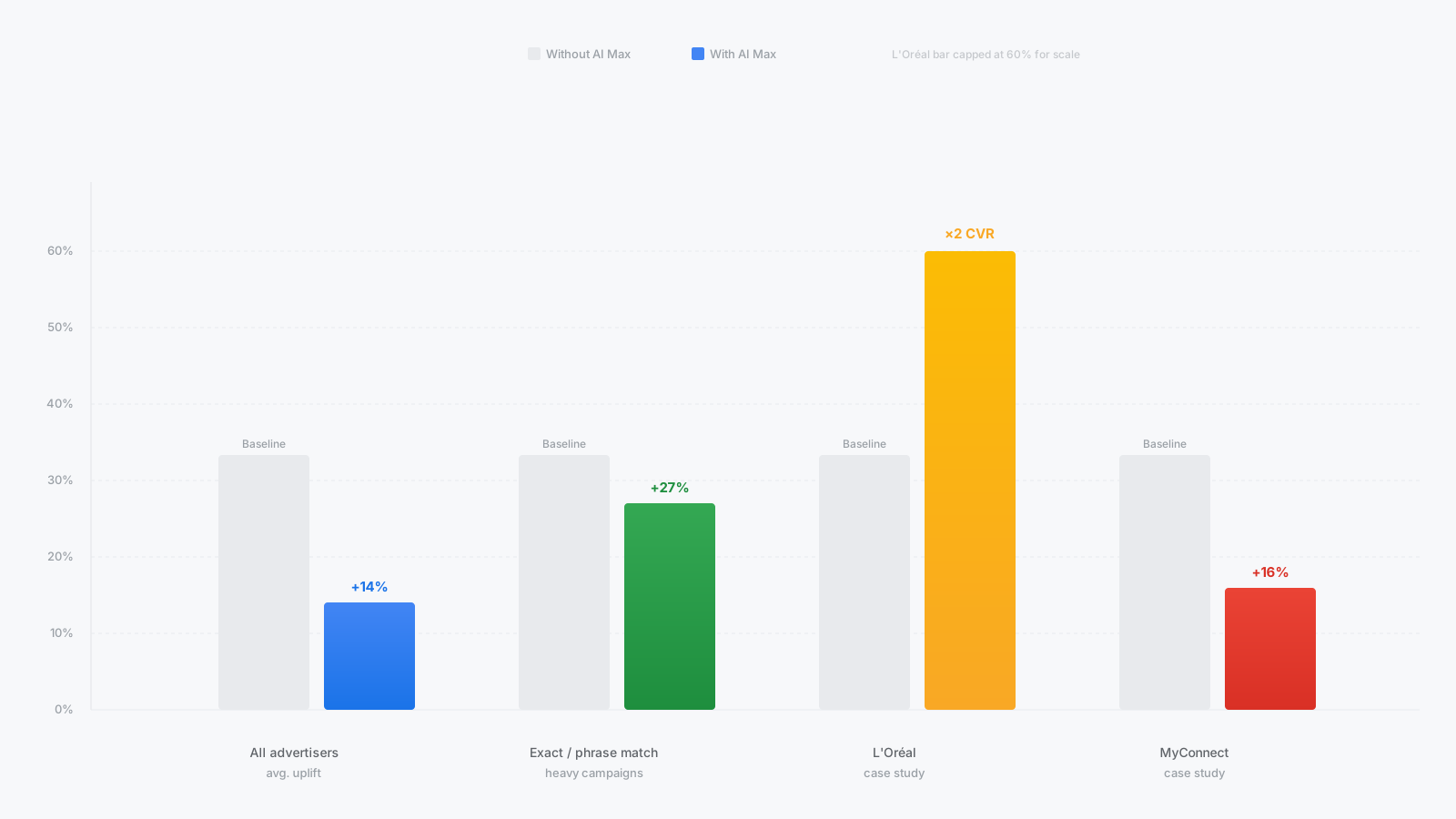
Google's internal data shows advertisers activating AI Max typically see 14% more conversions or conversion value at a similar CPA or ROAS. For campaigns running mostly exact and phrase match keywords — where expansion headroom is largest — the lift is closer to 27%. These aren't outlier numbers. They reflect a consistent pattern across account types and industries.
How It Actually Works
AI Max has two main components that can be enabled independently: Search Term Matching and Asset Optimization. Search Term Matching is what allows the AI to go beyond your keyword list. It learns from your existing keywords, creative assets, and landing page content to show ads on relevant searches you weren't explicitly targeting. This uses a combination of broad match logic and what Google calls keywordless technology — the system reads intent signals from your entire account context, not just the keyword string.
Asset Optimization covers two things: text customization and Final URL Expansion. Text customization generates new headlines and descriptions dynamically, drawing on your landing page content, existing ads, and keyword themes. The result is ad copy that adapts to the search query in real time rather than serving a static headline regardless of what someone typed. Final URL Expansion takes this further — instead of always sending users to your designated landing page, the AI identifies the most relevant URL on your site for each specific query.
One technical detail that matters before you enable it: if your campaigns use tracking templates, verify that Final URL Expansion works correctly with your setup. Dynamic landing page selection can conflict with static tracking templates and produce 404 errors without obvious warning signs. Test this before rolling out to your full campaign budget.
AI Max vs. Performance Max — What's the Difference?
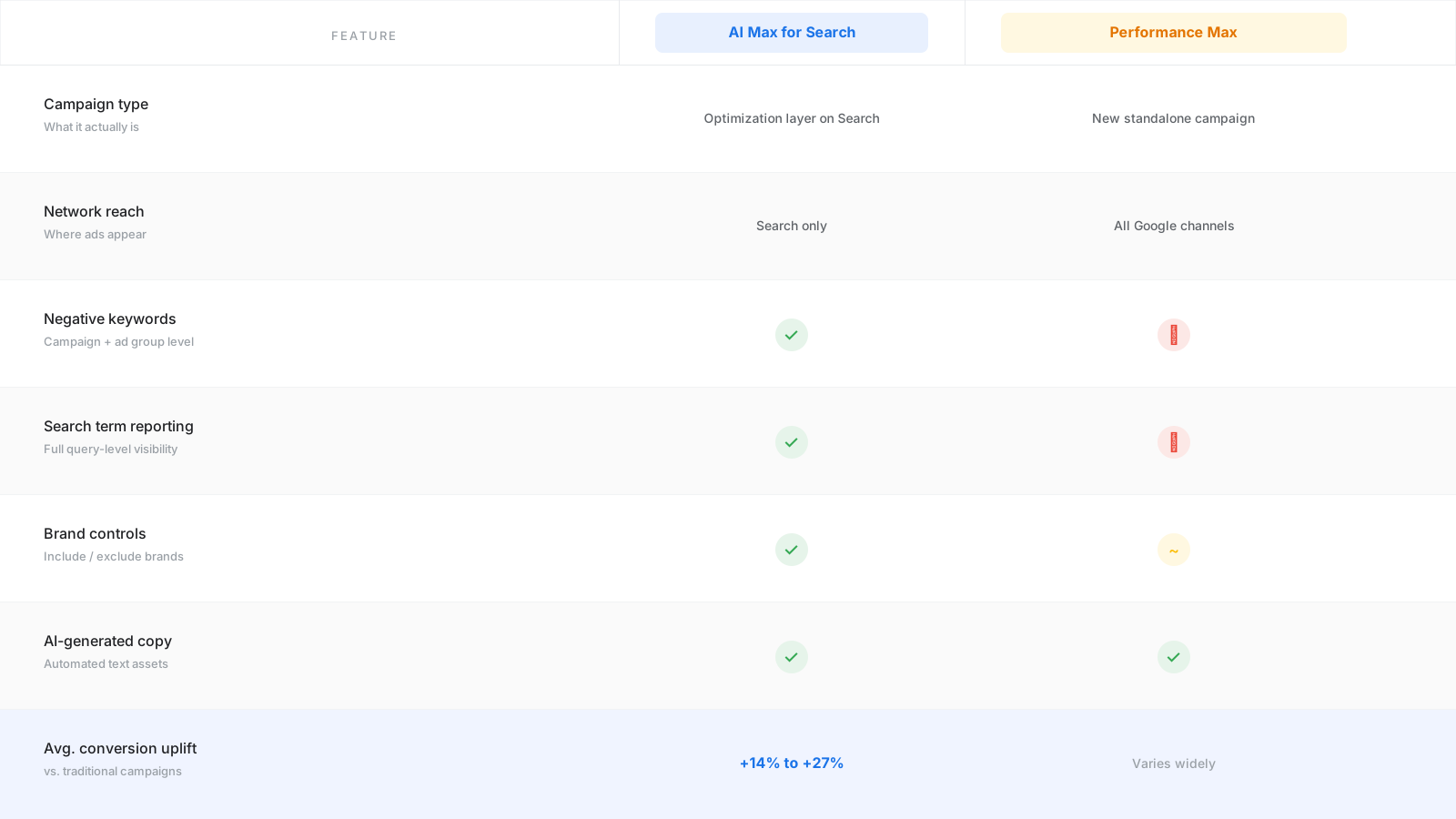
Performance Max runs across all Google inventory — Search, YouTube, Display, Gmail, Maps — and gives advertisers very limited visibility into where budget goes or which placements drive results. The reporting is aggregated to the point of being difficult to act on. AI Max is structurally different: it stays within the Search network, works on top of your existing keyword structure, and maintains the transparency that PMax deliberately obscures.
With AI Max you get full negative keyword support at both campaign and ad group levels — something Performance Max still doesn't properly support. You get query-level reporting that shows which searches triggered your ads and how specific combinations of search terms, headlines, and landing pages performed together. You can see what the AI is doing and adjust accordingly. That visibility is the main reason experienced Search advertisers prefer AI Max over expanding into PMax.
The practical rule is this: use AI Max when you want to get more out of Search without losing control or transparency. Use PMax when you genuinely need cross-channel reach across all of Google's inventory and you're comfortable trading visibility for distribution. They're not competing products — they solve different problems. Most accounts running both will find AI Max delivers cleaner, more attributable results on the Search side.
Real Results: What Advertisers Are Seeing
The aggregate numbers are one thing. Specific cases are more useful. L'Oréal doubled their conversion rate while cutting cost per conversion by 31%. Critically, they unlocked entirely new search queries — long-tail, intent-rich searches like "what is the best cream for facial dark spots" — that their previous keyword strategy had never captured. These weren't queries they were losing to competitors. They were queries that simply weren't in anyone's keyword list.
MyConnect, an Australian utility connection service, generated 16% more leads while reducing cost per lead by 13%. Thirty percent of those new conversions came from search queries they had never targeted before. That 30% figure matters because it illustrates what AI Max actually does: it finds demand that exists but wasn't being captured by manually-built keyword architecture.
The pattern across case studies is consistent. Accounts with solid historical conversion data — where the AI has strong signals to learn from — see the largest lifts. Accounts that are thin on conversions or running broad match heavily already see smaller differences. The better your existing campaign foundation, the more material the AI has to work with, and the more headroom it has to find incremental performance.
What You Need Before Enabling It
AI Max has real requirements that determine whether it will actually work in your account. You need at least 30 conversions in the past 30 days for the AI to have sufficient learning data — below that threshold the system doesn't have enough signal to optimize meaningfully. You need a minimum $50 daily budget to activate it at all, though in practice the recommended budget is roughly 15 times your target CPA. If your target CPA is $50, that means $750 per day for the algorithm to learn at a reasonable pace.
Smart Bidding must be enabled — Max Conversions or Max Conversion Value, with or without CPA and ROAS targets. Manual bidding campaigns aren't compatible. Conversion tracking must be properly configured, verified, and firing correctly. Broken or incomplete conversion tracking doesn't just limit AI Max — it means the AI is optimizing toward the wrong signal entirely.
Before you enable AI Max, set your brand exclusions and term exclusions explicitly. Give the algorithm clear boundaries to work within — brands you don't want to appear alongside, words or phrases that don't fit your messaging. Then run a 70/30 experiment, with 70% of budget staying in the control, for a minimum of 14 days. That's enough time for the algorithm to move through the learning phase and produce statistically meaningful results without putting your core campaign performance at risk.
The Honest Assessment
AI Max is the most transparent AI automation Google has shipped for Search advertisers. It's not flawless — the budget requirements are real, the AI-generated copy needs monitoring, and Final URL Expansion requires technical diligence to set up correctly. But it addresses the core complaint about Performance Max: you can actually see what's happening, control what the AI touches, and turn off anything that isn't working.
For accounts with solid conversion volume and strong keyword structures, this is worth testing now. The upside is meaningful and the downside — if you run it as an experiment rather than a full switch — is limited. For smaller accounts that don't yet have the data volume the AI needs, the priority is building that foundation first. AI Max performs at the level of the account underneath it. The better the base, the better the result.