
Marketing


Mykyta Hryhorenko
CEO & Co-founder
AI Is Now the Floor, Not the Differentiator
Generative AI tools now produce output good enough for real customer-facing use, which means the window for treating AI as an experiment has closed. Broad adoption is the baseline. The brands still running AI pilot programs are already operating a cycle behind competitors who have built AI into their production workflows as standard infrastructure. The conversation in serious marketing teams has moved from whether to use AI to how well the system is being used and what quality controls are in place around it.
The practical impact is significant: campaign production timelines have compressed, content volume has increased, and the cost of producing mediocre output has dropped to near zero. This creates a paradox. As AI makes it cheaper and faster to produce marketing content, the volume of content in every channel increases. More content means more competition for attention. More competition for attention means the quality bar for what actually gets noticed — let alone remembered — rises steadily. AI raises the floor of what's achievable. It does not raise the ceiling.
This is where the real shift lands for marketers. While AI will automate much of transactional marketing — performance reporting, bid management, A/B test execution, content scaling — human creativity, cultural intelligence, and authentic storytelling are becoming the primary differentiators between brands that grow and brands that generate impressions. Everyone has access to the same tools. What you do with them, and whether the output actually connects with real people, is the only thing that separates signal from noise.
Creative Has Become the Primary Signal
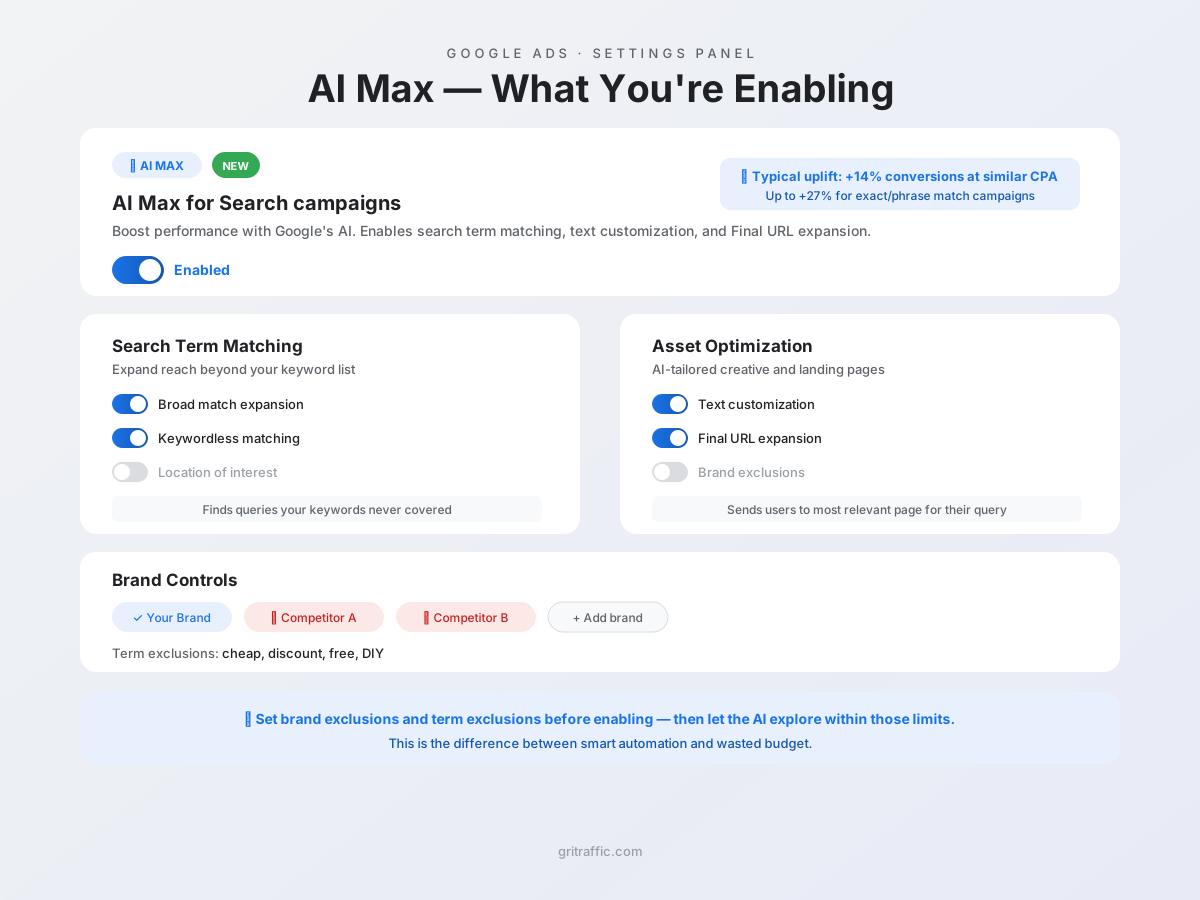
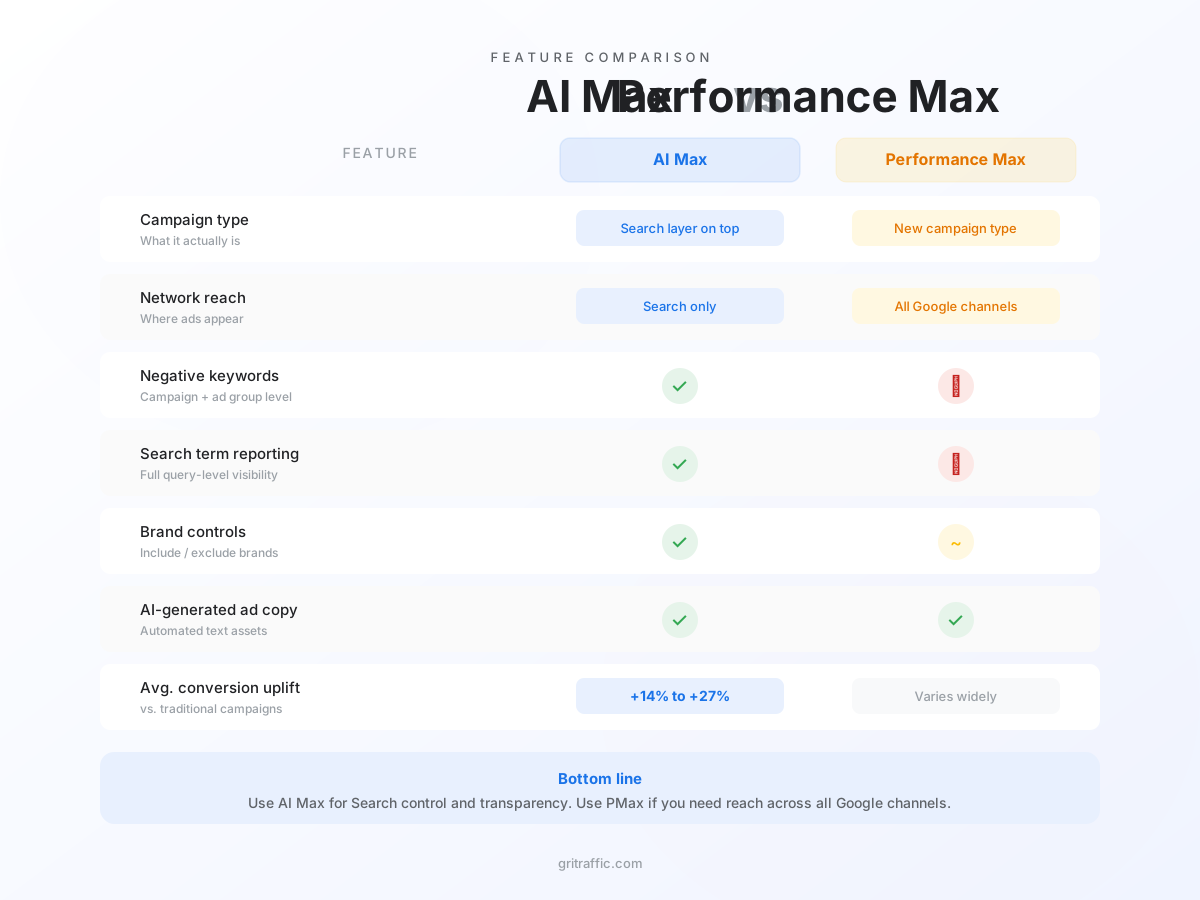
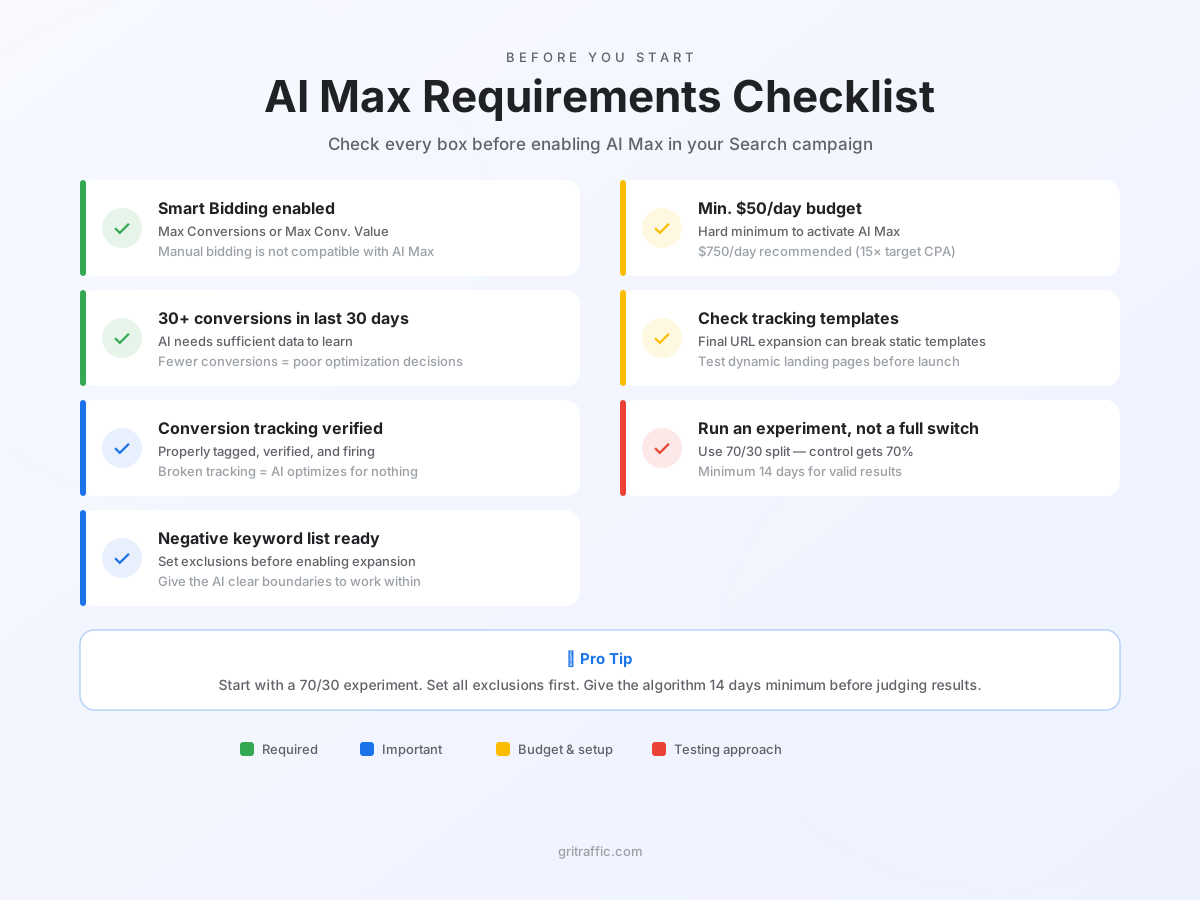
Across every major platform, the algorithm now reads your creative to decide who sees it — not the other way around. On Meta, Andromeda matches ads to users based on what the creative communicates. On Google, AI Max uses your asset library to find new search queries. On TikTok, the recommendation engine treats your content itself as the targeting brief. The strategic implication is the same everywhere: creative quality and diversity are now infrastructure, not a deliverable.
The brands adapting to this are treating creative production as a continuous operational process rather than a campaign-by-campaign project. Not a sprint before launch but a pipeline that runs consistently, refreshes regularly, and produces genuine variety — different formats, different angles, different stages of the customer journey — because algorithms on every platform penalize repetition and reward novelty. A thin creative library is a performance liability, and the cost shows up in CPMs before it shows up anywhere else.
There's a second dimension here that matters beyond paid media. Audiences are actively moving away from polished, obviously branded content toward material that feels human — real stories, real textures, real people who aren't performing for a camera. Overly produced content signals inauthenticity in a way that audiences, particularly younger ones, read immediately. Creator-led ads outperform traditional brand campaigns on Meta and YouTube not because they're cheaper to make, but because they don't look like ads. The algorithm rewards the engagement signal. The audience rewards the honesty.
Discovery Has Fundamentally Changed
The purchase funnel most marketing strategies were built around — awareness through search, consideration through content, conversion through retargeting — has inverted for a significant portion of consumer categories. Consumers now discover brands through social content, creator recommendations, and community conversations first. Search comes later, used not to find something new but to validate something already encountered. The entry point to the funnel has moved from Google to Instagram, TikTok, YouTube, and the niche communities where people actually spend their attention.
For brands, this creates a structural problem if social presence is treated as secondary. A brand that's invisible on social isn't just missing top-of-funnel awareness — it's missing the first step entirely. By the time someone searches for you, they've already encountered you somewhere else and want confirmation that you're worth engaging with. If that confirmation search turns up a weak presence, sparse reviews, or inconsistent messaging, the decision is made before a single paid click happens.
The practical response isn't to be everywhere at once. Reaching a mass audience through one channel is increasingly unachievable as attention fragments across AI-driven search, retail media, creator ecosystems, and niche communities. The approach that's working is more deliberate: identify the three channels where your specific audience actually spends meaningful time, build native presence in those channels specifically, and create content that adapts the same core narrative to each platform's format and culture rather than copying the same asset across every surface.
Micro-Communities Over Mass Reach
The shift away from broadcast marketing toward community-based engagement is one of the most durable trends in the current landscape — and one of the most underestimated by brands still optimizing for impression volume. Faced with algorithmic feeds, irrelevant content, and privacy concerns eroding digital trust, people are moving toward smaller, more intentional spaces where conversations feel meaningful and recommendations come from people they actually trust.
The data supports this shift in concrete terms. Brands using knowledge-sharing micro-community platforms have achieved 25% higher marketing ROI compared to broad channel campaigns. Nearly 40% of consumers trust micro-community recommendations as much as personal ones. The mechanism is straightforward: in a small community built around shared interest, a relevant brand recommendation doesn't feel like advertising — it feels like useful information from a peer. That's a fundamentally different conversion environment than a feed ad served to a broad audience.
For brands, the implication isn't to build their own community from scratch — that's a multi-year commitment most don't have the resources for. The more accessible approach is to show up with genuine value in communities that already exist: answering questions, sharing useful information, collaborating with the creators and voices those communities already trust. Creator relationships that compound over time are the mechanism. The smartest brands in 2026 aren't buying creator posts — they're building creator partnerships where the creator has real incentive to stay committed, and where that commitment makes the audience's trust transfer to the brand over time.
ROI Accountability Is No Longer Optional
The macro environment has changed the internal politics of marketing budgets permanently. As economic pressure continues and consumer purchasing power remains constrained, CFOs are applying financial scrutiny to marketing spend at a level that would have been unusual five years ago. Every channel needs to show where it sits in the revenue path. Every campaign needs a measurable connection to business outcomes. The brand awareness budget that couldn't be tied to revenue attribution is the first thing cut when targets are missed.
This doesn't mean every campaign must be direct response. Brand building has long-term value that short attribution windows don't capture, and sophisticated finance teams understand this. But marketers need a model — even an imperfect one — that connects what they spend to what the business gets back, endorsed by the CFO, applied consistently across the organization. Agentic AI optimization tools now make this more achievable than it used to be: campaigns can be tuned dynamically based on real-time performance data, budget can be reallocated automatically toward what's working, and reporting can tie media investment to pipeline contribution rather than just impressions and clicks.
The Common Thread
Underneath every trend covered here is a single shift in how marketing actually creates value. The tools are more powerful, the automation is more capable, and the data is more actionable than at any previous point. And yet the fundamentals that determine whether any of it works are unchanged: genuine creative that earns attention, authentic presence that builds trust, distribution that meets audiences where they actually are, and measurement that connects effort to outcome.
The brands struggling in 2026 are mostly those that added AI tools on top of a weak creative strategy, chased platform features without fixing their data infrastructure, or optimized for metrics that look good in a dashboard but don't connect to revenue. The brands growing are the ones that used better tools to do the fundamentals better — not to replace them. That's the shift that actually matters, and it's one that will still be true when the specific platforms and features covered here have been replaced by whatever comes next.