
Marketing


Vsevolod Hryhorenko
CMO & Co-founder
The Real Reason Ads Feel Expensive
Most businesses that come to us frustrated with their advertising share a version of the same story. They've increased the budget, tested new creatives, switched platforms, hired a new agency — and the results still don't move. The conclusion they've drawn is that advertising has become too expensive, too competitive, or simply doesn't work for their industry. In almost every case, that conclusion is wrong.
The issue isn't the ad. The ad is doing its job — it's generating clicks, impressions, and traffic. The issue is what happens after the click. A paid ad is essentially a door. It brings someone to the entrance of your business and hands them off. What happens next — the landing page, the offer, the trust signals, the follow-up sequence — determines whether that person becomes a customer or disappears. When the door is working but the room behind it is broken, increasing ad spend just brings more people to a broken experience. The cost per acquisition climbs. The ROAS drops. The budget looks like the problem because it's the most visible variable. But changing the budget without fixing the funnel is like turning up the volume on a song that's playing out of tune.
Understanding this distinction is the first step. The second is knowing exactly where funnels break — because it's rarely random, and it's rarely just one place.
Where Funnels Actually Break
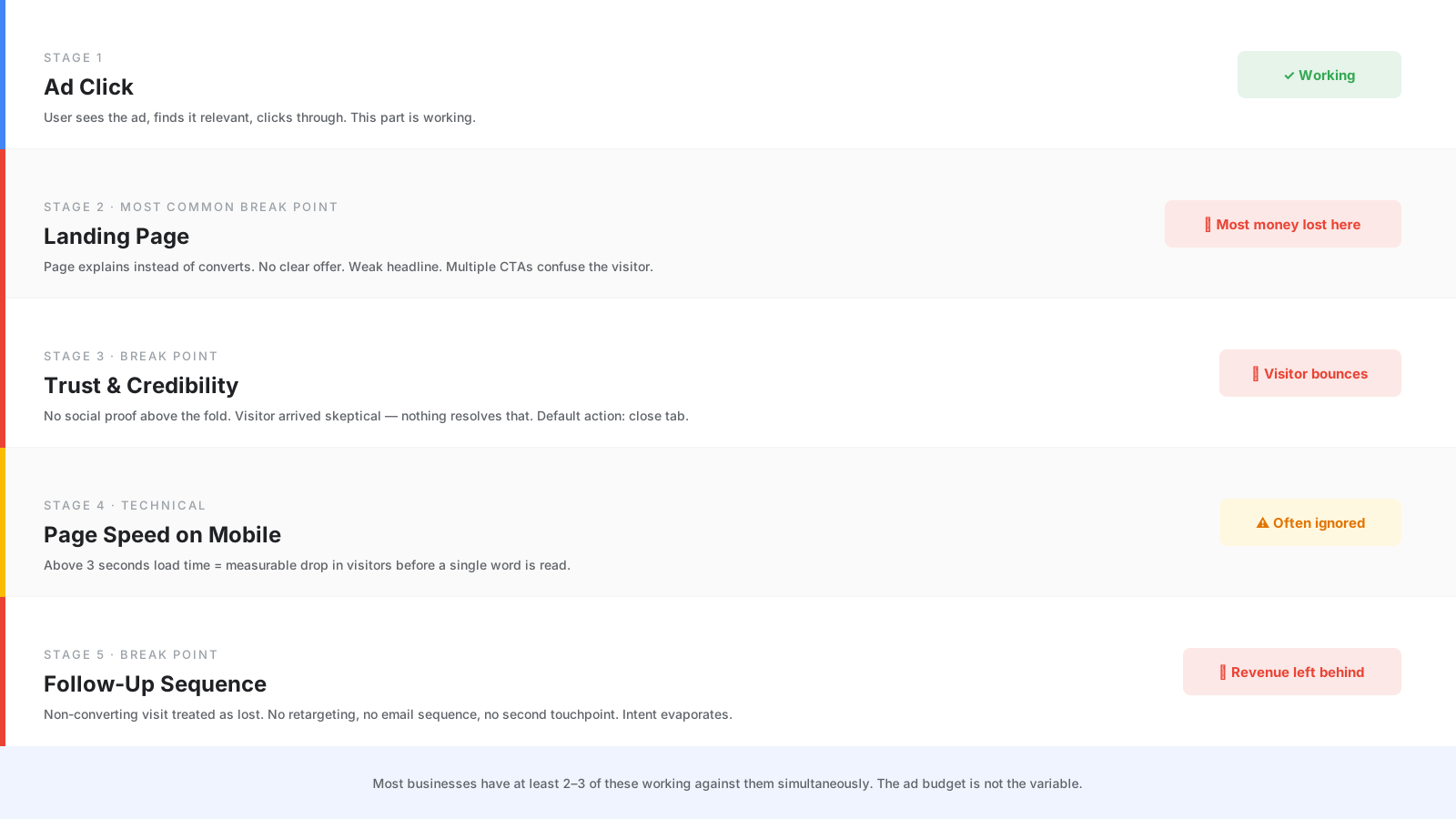
There are five points in a typical paid traffic funnel where performance consistently degrades. Most businesses have at least two of them working against them simultaneously.
1. The landing page
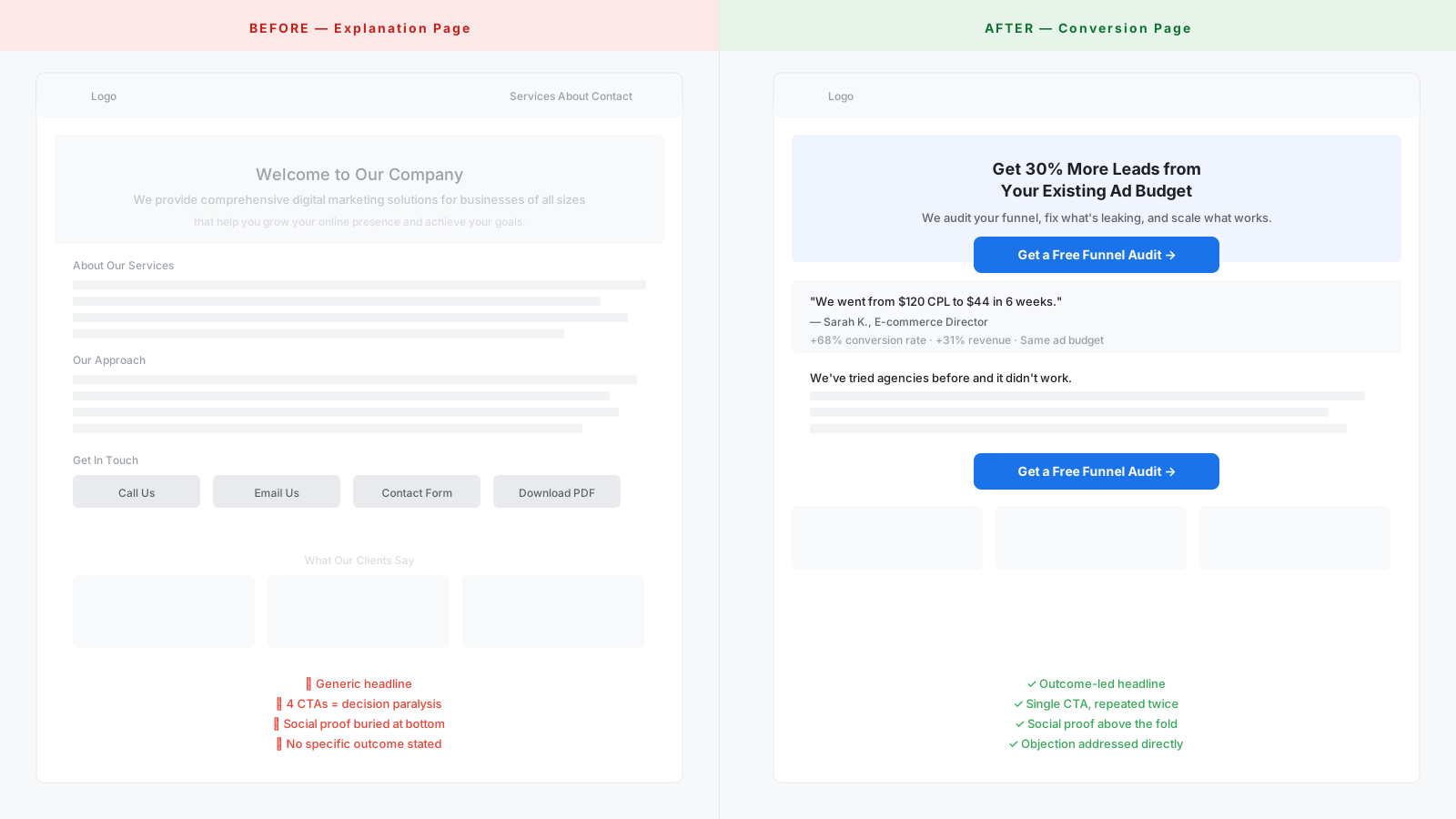
A significant percentage of ad traffic lands on a page that wasn't built to convert — it was built to explain. Explanation and conversion are different objectives. A page that tells your story at length, lists all your services, and ends with a generic contact form is an explanation page. A page that leads with a specific outcome, addresses the visitor's core objection, and gives them one clear action to take is a conversion page.
2. Offer clarity
Not the quality of what you're selling — the clarity of how it's communicated. If a visitor has to read three paragraphs to understand what they're getting, you've already lost most of them. The offer needs to be legible in five seconds: what it is, who it's for, and what happens next.
3. Trust signals
Visitors who arrive from a paid ad are skeptical by default — they didn't seek you out, they were intercepted. Without social proof, recognizable signals of credibility, or evidence that other people have made this decision and been satisfied, the default response is to close the tab.
4. Page speed
Pages that load slowly on mobile lose a measurable percentage of visitors before they see a single word. Above three seconds, you're bleeding traffic before the funnel even starts.
5. Follow-up
Most businesses treat a non-converting visit as a lost opportunity rather than the beginning of a sequence. No retargeting, no email, no second touchpoint — intent that could have compounded simply evaporates.
The Landing Page Problem in Detail
The landing page is where the most money is lost and the most improvement is available. It's also the element most businesses are least willing to change, because it often feels like a reflection of the brand rather than a functional tool. That emotional attachment is expensive.
A high-converting landing page for paid traffic has a specific anatomy:
Headline first. Opens with a statement that speaks directly to the outcome the visitor wants — not the name of your company, not a tagline, not a welcome message. The first five seconds determine whether someone stays or leaves.
Objection second. Below the headline, address the specific objection most likely to stop a conversion. For most service businesses that's some version of "I've tried this before and it didn't work." Acknowledging it directly, and providing evidence that it doesn't apply here, moves people further than any amount of feature-listing.
Social proof high on the page. A single specific testimonial from a real client describing a real outcome — with numbers if possible — does more conversion work than a full paragraph of self-description. It belongs near the top, not buried at the bottom where most people never scroll.
One call to action. Pages that offer multiple options — call us, email us, fill out the form, download the guide, follow us on Instagram — create decision paralysis. The visitor does nothing because they have too many ways to do something. One action, framed in terms of what the visitor gets rather than what they're doing, consistently outperforms. Repeat it at logical intervals down the page, not just at the bottom.
Why Follow-Up Changes Everything
The single most overlooked part of a paid traffic funnel is what happens after a non-conversion. The majority of people who click an ad and visit a landing page are not ready to buy on the first visit. This is not a failure — it's normal buyer behavior, particularly for any product or service above a low impulse-purchase price point. The failure is treating those visits as lost rather than as the beginning of a relationship.
A visitor who clicked your ad has already demonstrated intent. They saw the ad, found it relevant enough to click, and spent time on your page. That's a meaningful signal. Without a follow-up system — retargeting ads, an email sequence, a lead magnet that captures contact information — that intent evaporates. With one, it compounds. Retargeting campaigns that follow up non-converting visitors with a different angle, a specific offer, or a piece of social proof consistently outperform cold prospecting campaigns on cost per conversion, because the audience is already warm.
Email follow-up for leads who do fill out a form or take a partial action is where most service businesses leave the most money behind. The speed of first response is the most significant variable in lead-to-client conversion rates. A lead contacted within five minutes of submitting a form converts at a dramatically higher rate than one contacted the next day. The quality of the follow-up sequence — whether it builds trust, answers objections, and creates a clear path to a conversation — determines whether a warm lead becomes a client or goes to a competitor who was faster and more deliberate about the process.
How to Diagnose Your Funnel Before Touching the Budget
Before increasing ad spend or changing platforms, run a simple diagnostic on what you already have. Each symptom points to a different problem — and a different fix.
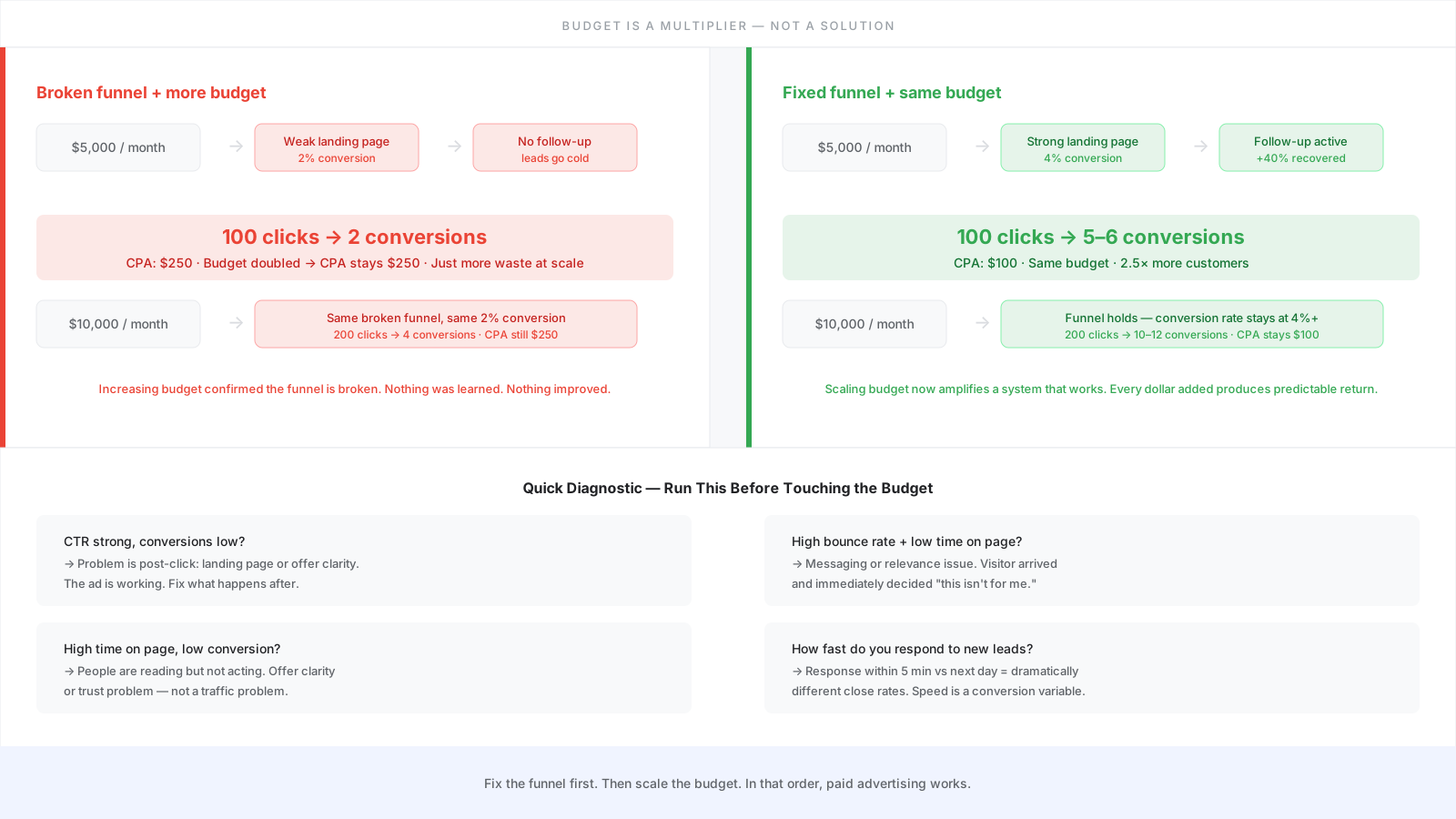
Strong CTR, low conversions → The problem is post-click. The ad is working. The landing page or offer clarity isn't. Don't touch the ads.
High bounce rate + low time on page → Messaging or relevance issue. Visitors arrive and immediately decide this isn't for them. The disconnect is between what the ad promised and what the page delivered.
High time on page, low conversion → People are reading but not acting. This is an offer clarity or trust problem — not a traffic problem. The page is interesting but not convincing.
Page load above 3 seconds on mobile → You're losing a measurable percentage of visitors before the page fully renders. No copy optimization recovers that. Fix the technical issue first.
New leads not contacted same day → Check your actual response times. A lead contacted within five minutes converts at dramatically higher rates than one contacted the next day. If your follow-up is slow or generic, that's where clients are going to competitors.
The diagnostic takes an afternoon. The clarity it produces changes where the next dollar goes.
The Budget Is a Multiplier, Not a Solution
This is the reframe that changes how businesses approach growth through paid advertising. Budget amplifies whatever exists in the funnel. If the funnel converts well, more budget produces more customers at a predictable cost. If the funnel is broken, more budget produces more waste at scale. This is why the same dollar spent by two businesses in the same industry on the same platform can produce wildly different results — the variable isn't the platform or the competition, it's the system the traffic is entering.
The businesses that grow consistently through paid advertising are not the ones with the largest budgets. They are the ones who have built a funnel that converts well enough to justify increasing spend, and who increase it deliberately based on what the data shows rather than out of frustration or hope. Every percentage point of improvement in landing page conversion rate, every reduction in response time for new leads, every additional touchpoint in a follow-up sequence — these compound. A funnel that converts at 4% instead of 2% doesn't just double your conversions. It halves your effective cost per acquisition, which means the budget you already have goes twice as far.
Fix the funnel first. Then scale the budget. In that order, paid advertising works. In the other order, it's an expensive way to confirm that something downstream is broken.