
Google Ads


Vsevolod Hryhorenko
CMO & Co-founder
Why Legal Is One of the Hardest Verticals to Run Ads In
Legal keywords are among the most expensive in Google Ads — personal injury terms regularly exceed $100 per click, and competitive practice areas in major cities can go higher. That alone makes the margin for error smaller than in almost any other industry. A poorly structured campaign doesn't just underperform — it burns through budget fast enough to make the whole channel look unviable, which is why so many law firms try Google Ads once, conclude it doesn't work for them, and walk away from what could have been their most reliable source of new clients.
The firms that make it work aren't necessarily spending more. They're spending differently — with a level of structural precision that the high CPC environment demands. Broad targeting, generic landing pages, and weak conversion tracking that might produce acceptable results in e-commerce will consistently lose money in legal.
Keywords: Where Most Law Firms Lose Money First
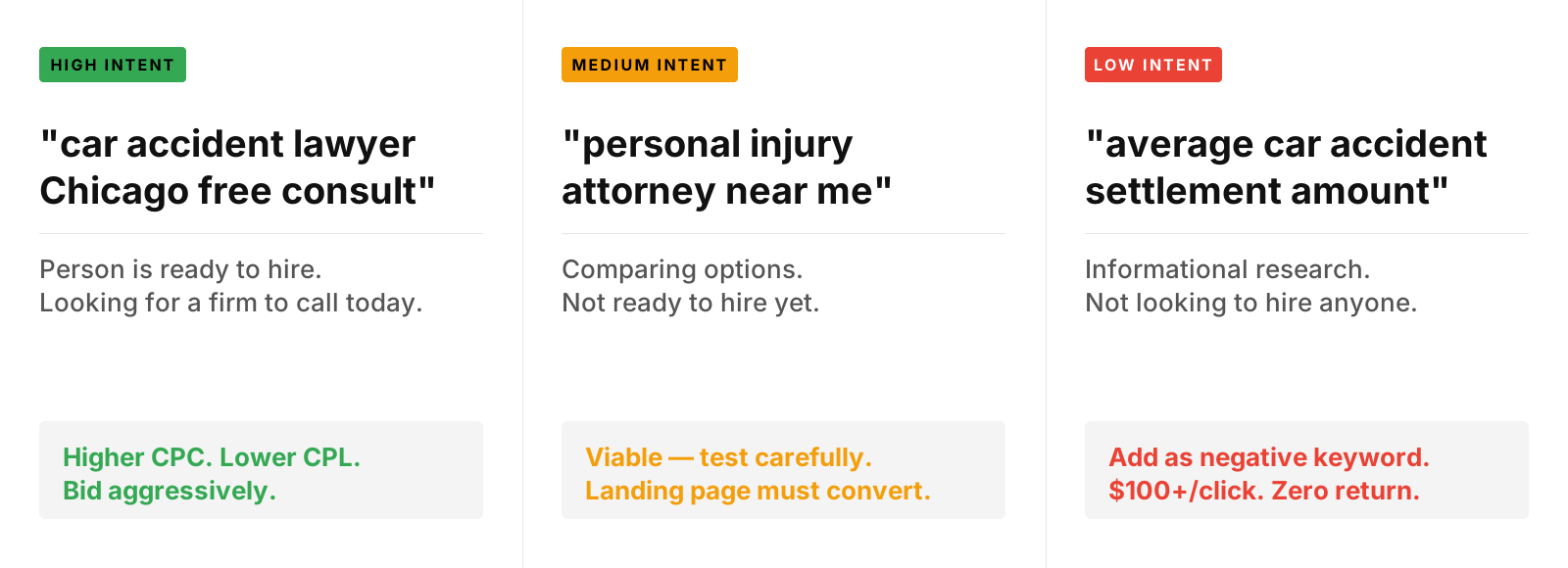
Keyword selection in legal has a specific problem that doesn't exist at the same scale in other verticals: the gap between someone searching and someone who is actually a viable client is enormous. "Car accident lawyer" could be someone who needs immediate representation — or someone doing research for a class, writing an article, or curious after watching a documentary. At $80 a click, that distinction matters.
The keyword strategies that work in legal share a few characteristics:
Specificity over volume. "Personal injury attorney Chicago free consultation" is more expensive per search but cheaper per qualified lead than "personal injury lawyer." The more specific the query, the clearer the intent.
Negative keyword lists built from actual search term data. In legal, this means excluding informational queries — "how to", "what is", "can I", "average settlement for" — unless you're specifically targeting early-funnel research traffic with a content strategy to match. Most firms aren't, and those clicks are pure waste.
Separate campaigns by practice area. Mixing personal injury, family law, and criminal defence into one campaign means the algorithm can't optimise toward the conversion patterns of each type of case. Each practice area has different CPCs, different lead quality signals, and different closing rates — they should be measured and managed separately.
Landing Pages: The Part Most Firms Get Wrong
A law firm's website is built to communicate credibility, explain services, and establish authority. That's the right goal for an organic presence. It's the wrong goal for a paid traffic landing page, and sending ad clicks to your homepage or a general practice area page is one of the most reliable ways to waste a legal marketing budget.
The landing page a paid click lands on needs to do one thing: convert a sceptical visitor into a lead, fast. In legal, that means:
Practice-area-specific pages. Someone clicking an ad for a DUI attorney should land on a page that talks exclusively about DUI defence — not a page that lists all twelve practice areas your firm covers. Relevance between the ad and the page is the single biggest variable in conversion rate.
Trust signals near the top. Bar association memberships, case results where ethically permissible, years of experience, recognisable awards — these need to be visible before the visitor has to scroll. People considering legal representation are making a high-stakes decision. They need reasons to stay on the page within the first few seconds.
One clear action. A phone number and a form is usually the right combination for legal. Everything else — newsletter signup, resource downloads, social links — creates distraction at the moment when you want the visitor focused on contacting you. Call tracking numbers are non-negotiable: without them you have no idea which campaigns are driving phone leads, and you'll make budget decisions based on incomplete data.

Ad Copy in a Regulated Industry
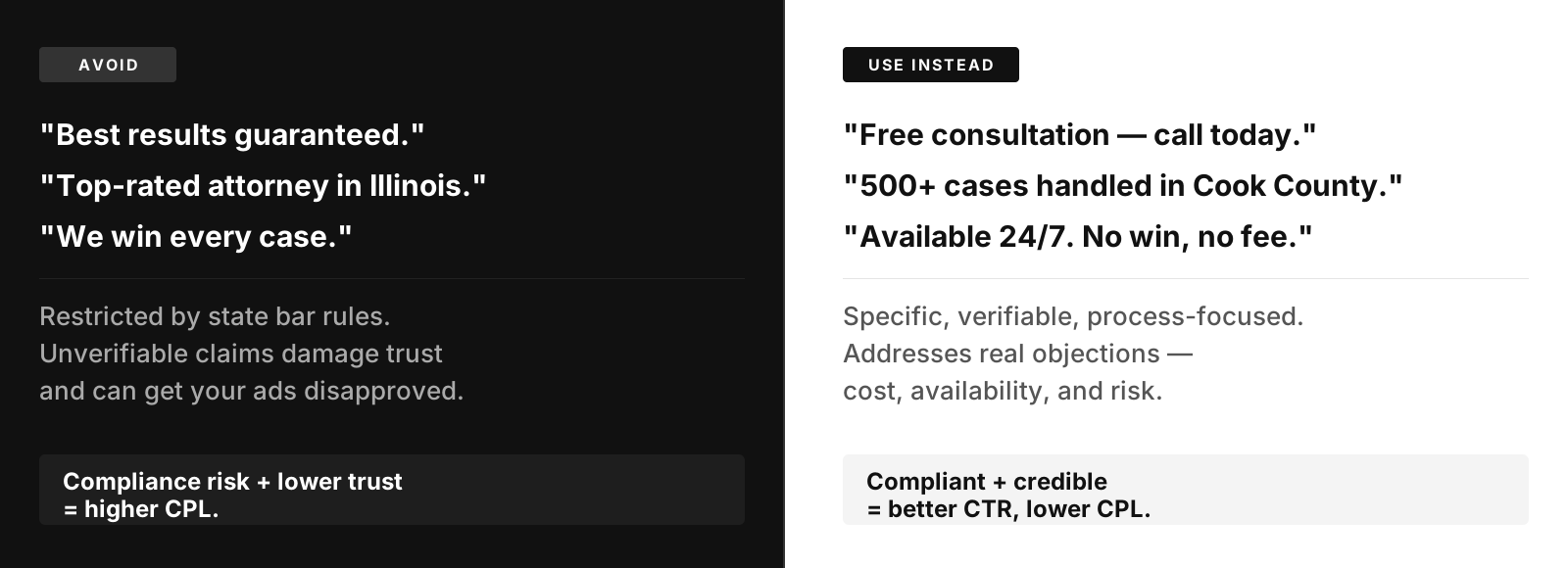
Legal advertising is subject to restrictions that vary by state bar and jurisdiction — claims about outcomes, use of "specialist" or "expert" designations, and certain guarantees are restricted or prohibited in many places. This isn't just a compliance issue; it shapes what good ad copy looks like.
The firms with the strongest click-through rates in legal tend to lead with specificity and process rather than outcome promises. "Free consultation — speak with an attorney today" outperforms vague claims about results. "Over 500 cases handled in Cook County" is more credible and more compliant than "best results guaranteed." Specificity builds trust and sidesteps the compliance problems that come with superlatives.
Extensions matter more in legal than in most verticals. Callout extensions that highlight free consultation, no win no fee, or 24/7 availability add information that directly addresses the hesitations a prospective client has before clicking. Sitelink extensions to specific practice areas allow one ad to serve multiple intents within the same search. Location extensions for firms serving specific geographies increase relevance and click-through rate for local searches.
Budget Reality and Bidding Strategy
There is no way to run Google Ads in competitive legal markets on a small budget and expect meaningful volume. The economics are what they are — if average CPC for your target terms is $80 and you need 20 clicks to generate a lead, your cost per lead floor is $1,600 before any optimisation. That's not a reason to avoid the channel; a single retained client in most practice areas more than justifies it. But it does mean the conversation about budget needs to start with honest numbers rather than what feels comfortable.
On bidding: start with Maximise Conversions until you have at least 30 conversion events in a 30-day window, then transition to Target CPA. Call conversions tracked through a call tracking platform need to be included in that count — firms that only track form fills are systematically underreporting conversions and making worse bidding decisions as a result.
The Firms That Win Aren't the Ones With the Biggest Budgets
In legal advertising, budget matters less than structure. A firm spending $5,000 per month with specific keywords, dedicated landing pages, call tracking, and a well-segmented campaign architecture will consistently outperform a competitor spending $20,000 into a poorly built account. The high CPC environment punishes structural mistakes faster and more expensively than almost any other vertical — which means the firms willing to build the foundation correctly get a disproportionate return on what they spend.
The channel works. It works reliably for firms that treat it as a system to be built and maintained rather than a budget to be switched on. Get the keywords right, get the pages right, track everything, and the economics follow.