
Marketing


Mykyta Hryhorenko
CEO & Co-founder
The Ceiling Isn't Where You Think It Is
There's a pattern that repeats across e-commerce businesses with uncomfortable consistency. A brand launches, finds product-market fit, runs ads that work, and grows — sometimes quickly. Then somewhere between $500K and $2M in annual revenue, or between $50K and $200K in monthly ad spend, the growth stops. Not dramatically. It just flattens. The team works harder, the budget goes up, new channels get added, and the numbers barely move.
The instinct at that point is to look outward. The market is too competitive. The platform algorithm changed. The product needs refreshing. A new agency might fix it. Sometimes those things are true. More often, the ceiling isn't coming from outside the business — it's structural. The brand has scaled a system that was never built to grow beyond a certain point, and the tactics that got it here are now the thing holding it back.
This is the plateau problem, and it's almost never about budget or product quality. It's about what the business is actually built on — and whether that foundation can support the next level of growth or whether it quietly collapses under the weight of more spend and more traffic. Diagnosing it correctly is what separates brands that break through from ones that spend the next two years optimizing around a ceiling they don't realize they've built themselves.
You're Scaling the Wrong Thing
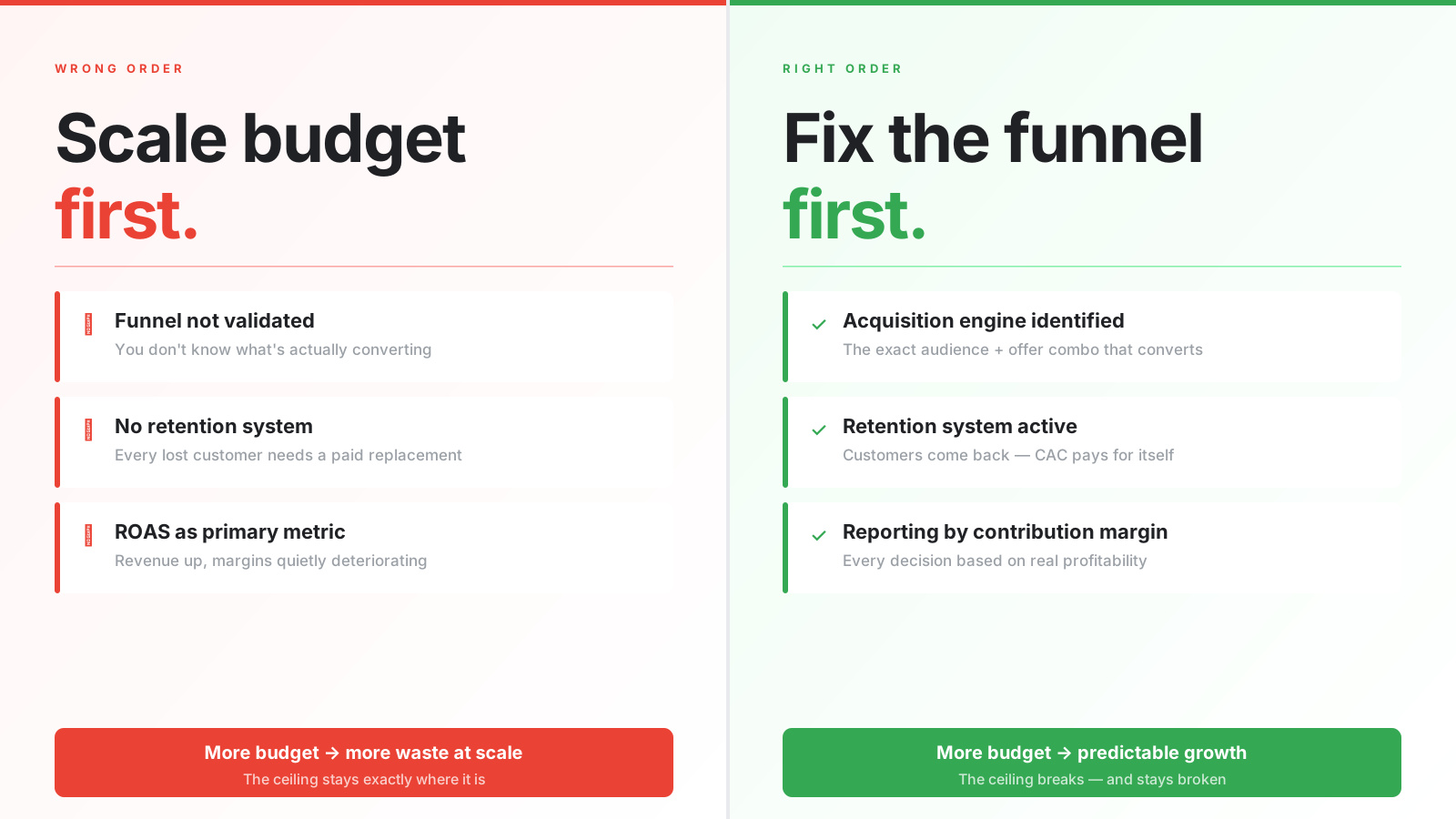
The most common reason e-commerce brands plateau is that they start scaling before they've established what's actually working. Early growth creates a false signal. Revenue goes up, ROAS looks acceptable, and the natural response is to put more money in. But early traction in e-commerce is often driven by a combination of factors that don't scale — a founder's network, a novelty effect, a seasonal spike, or a single ad creative that happened to resonate with a narrow audience. When that initial tailwind runs out, scaling the same approach just accelerates the decline.
The brands that break through the plateau have typically done one thing differently: they've identified their actual acquisition engine before trying to scale it. Not the ad account. Not the channel. The specific combination of audience, message, offer, and landing experience that produces a customer at a cost that leaves room for margin and repeat purchase. That combination is usually narrower than brands expect — often one or two customer segments, one or two creative angles, one specific offer structure — and it needs to be understood clearly before budget goes up.
Scaling without that clarity is expensive. Every dollar added to an undefined system produces diminishing returns, because the algorithm is being asked to optimize toward a signal that isn't clean. The data gets noisier, the CPA drifts up, and the team interprets it as a platform problem rather than a structural one. The fix isn't more budget. It's more precision first, then budget.
The Retention Problem Nobody Talks About
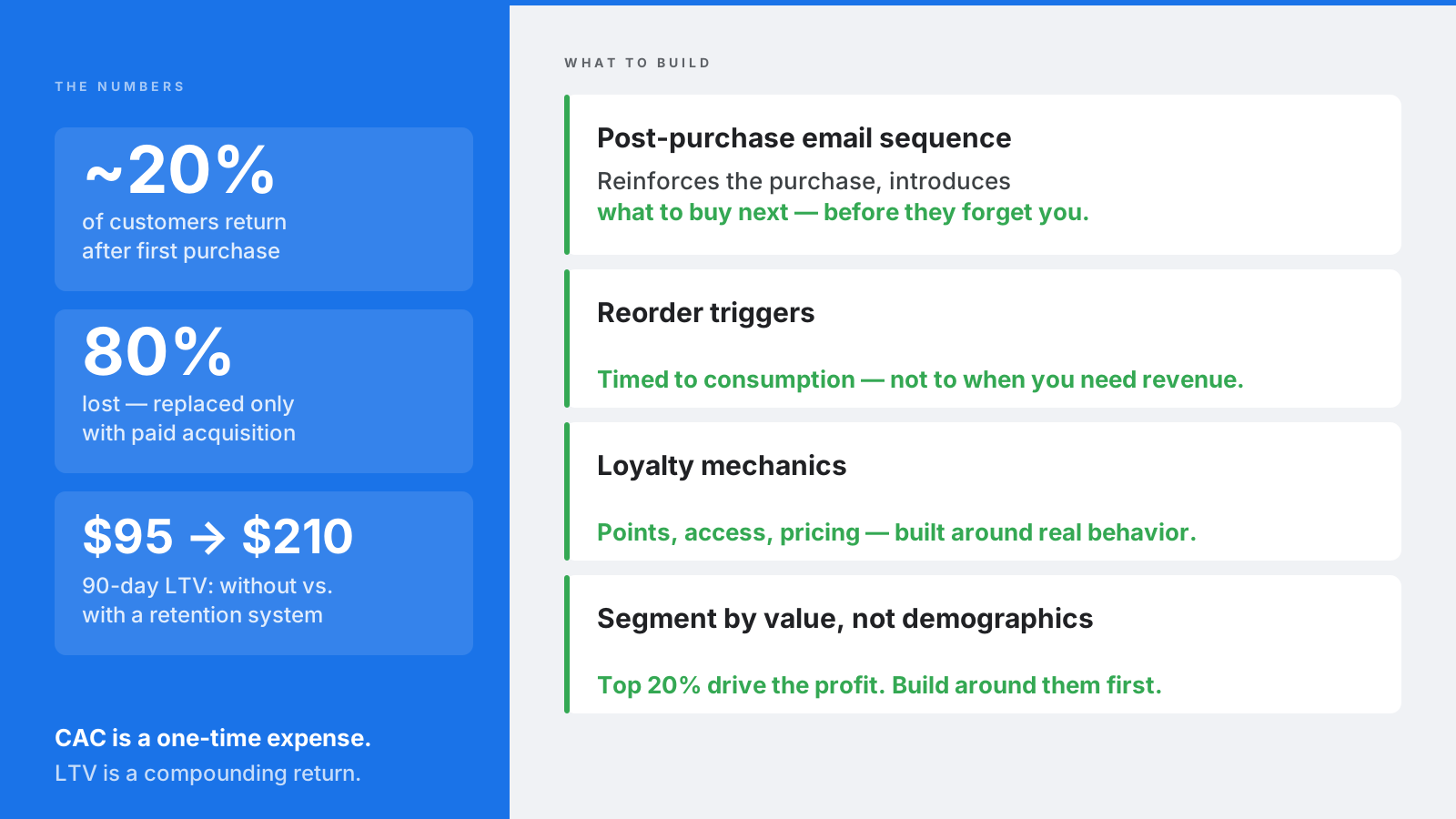
Most e-commerce brands are running a leaking bucket without knowing it. They're acquiring customers at the top of the funnel while losing most of them permanently after the first purchase. The entire growth model depends on continuously replacing those lost customers with new ones — which means the cost of growth compounds over time. As acquisition costs rise and the most accessible audiences become saturated, the economics of the model quietly deteriorate even when top-line revenue looks stable.
The brands that break through the plateau almost always have a meaningfully better retention rate than their competitors. Not because they have a better product — often the product is comparable — but because they've built a post-purchase experience that creates a reason to come back. This includes:
Email and SMS sequences that activate after the first purchase with relevant, timely content — not generic promotional blasts, but sequences designed to reinforce the purchase decision, introduce complementary products, and build a relationship before asking for another sale.
Loyalty mechanics that give customers a tangible reason to return — points, early access, member pricing — structured around the actual purchase frequency of the category rather than copied from a competitor.
Reorder triggers built around the natural consumption cycle of the product. If a customer typically reorders at 45 days, a reminder at day 40 from someone who understands their purchase history outperforms a random promotional email by a wide margin.
Customer acquisition cost is a one-time expense. Lifetime value is a compounding return. Brands that treat retention as infrastructure rather than an afterthought operate with fundamentally different unit economics — and that difference is what makes scaling possible.
The Metrics That Create the Ceiling
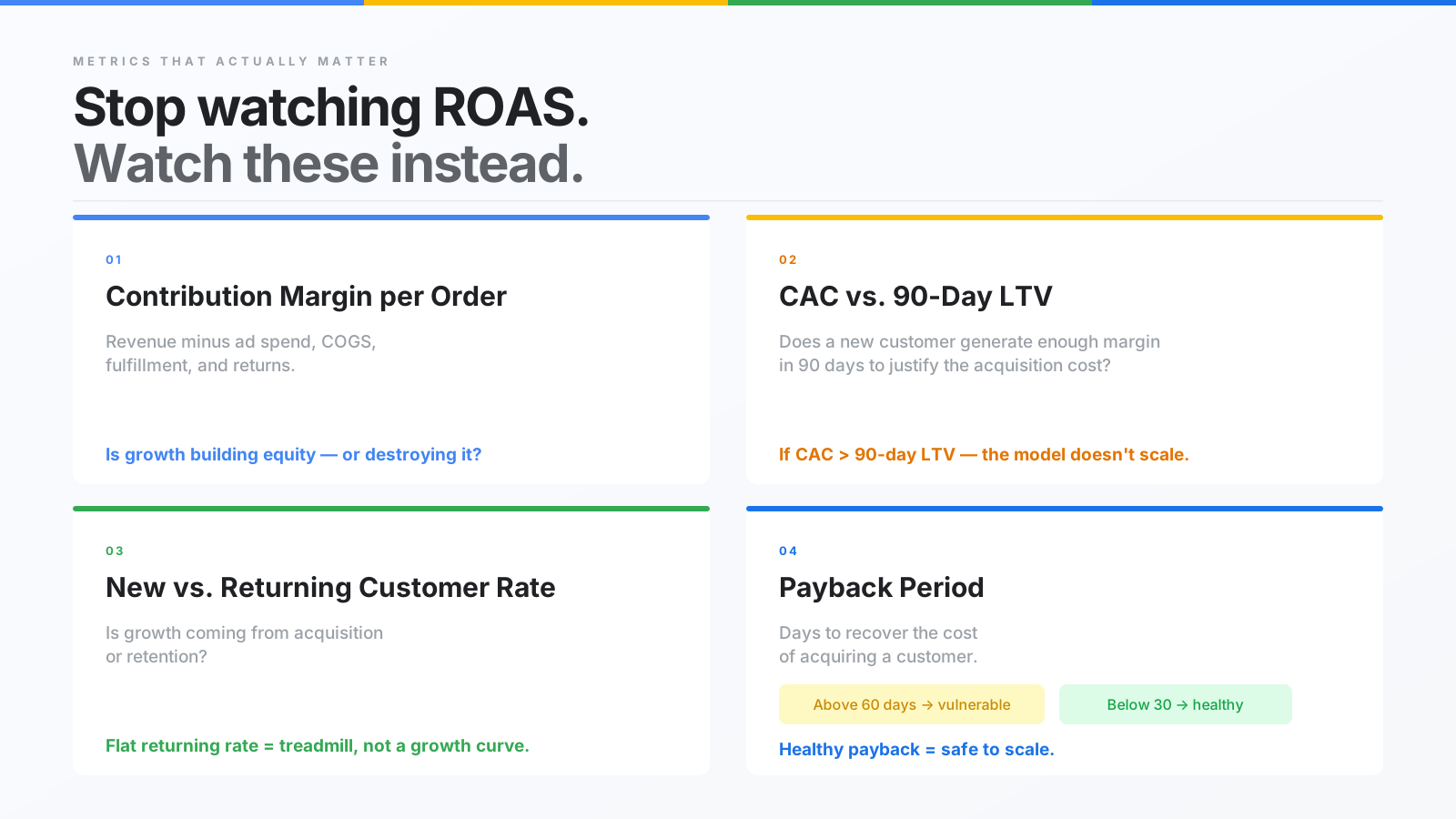
A significant number of e-commerce plateaus are caused not by poor performance but by measuring the wrong things and making decisions based on numbers that look good but don't reflect business health. The most common version of this is ROAS as the primary metric.
ROAS measures revenue returned per dollar spent on advertising. It's clean, it's visible in every ad platform, and it feels like a direct measure of performance. The problem is that revenue is not profit. A 4× ROAS campaign that's driving high-refund products, acquiring single-purchase customers who never return, and running in a category with 60% cost of goods is not a successful campaign — it's a slow bleed that looks like growth. The dashboard is green. The business is shrinking.
The metrics that actually indicate whether a brand can break through the plateau are different:
Contribution margin per order — revenue minus ad spend, COGS, fulfillment, and returns. This is the number that determines whether growth is building equity or destroying it.
Customer acquisition cost vs. 90-day LTV — does the average customer generate enough margin in the first 90 days to justify what it cost to acquire them?
New customer rate vs. returning customer rate — is growth coming from new customers, returning ones, or are you paying to reacquire your own customers through retargeting?
Payback period — how many days does it take to recover the cost of acquiring a customer? Brands with payback periods above 60 days are extremely vulnerable to any disruption in cash flow or platform performance.
Switching to contribution-margin-based reporting is uncomfortable because it often reveals that campaigns that looked profitable were not. But it's the only way to make decisions that support genuine scale.
What Breaking Through Actually Requires
The brands that move past the plateau share a consistent set of characteristics that have less to do with tactics and more to do with how they're built. They have clean data infrastructure — server-side tracking, properly configured attribution, and a reporting model that connects ad spend to margin rather than just revenue. Without this, every optimization decision is based on incomplete information, and scaling amplifies the errors.
They've also made a deliberate choice about which customer segment to build around. Not every customer is equal. E-commerce brands that have segmented their customer base by margin, purchase frequency, and lifetime value consistently find that a small percentage of customers — often 20% or fewer — are responsible for the majority of profitable revenue. The plateau often breaks when brands stop trying to acquire everyone and start building acquisition systems specifically designed to find more of their best customers.
Finally, they treat creative as a system rather than a project. The brands stuck at the plateau typically have a small, aging creative library built for the ad unit that worked two years ago. The brands growing have a continuous production process — new angles tested weekly, winning concepts iterated and expanded, losing concepts retired quickly. The creative system feeds the algorithm the signal diversity it needs to find new audiences, and it compounds over time in a way that a static creative library never can.
The Honest Diagnosis
The plateau is almost never a mystery if you're willing to look at the right numbers. The business either has a retention problem, a metrics problem, a creative system problem, or a combination of all three — and usually the data already in the account points directly at which one it is.
The question isn't whether these problems can be fixed. They can, and the businesses that fix them grow in ways that feel qualitatively different from the growth that preceded the plateau — more stable, more predictable, better margins. The question is whether the team running the business is looking at the right data to see the problem clearly, or whether they're optimizing toward the metrics that feel good while the actual ceiling stays firmly in place.
Growth that's built on a real foundation scales. Growth that's built on the right combination of timing and spend eventually finds its ceiling. The difference between the two is visible in the data long before it shows up in the revenue line — if you know what you're looking for.