
Paid Ads

Vsevolod Hryhorenko
CMO & Co-founder
The CPL Problem Is Rarely Where You Think It Is
Cost per lead going up is one of the most common complaints from businesses running paid ads. The instinct is to blame rising competition, algorithm changes, or the platform — and conclude that the only solution is to spend more. That instinct is almost always wrong.
CPL is a ratio: what you spend divided by how many leads you get. It can be improved from either direction. Most businesses only ever pull the budget lever. The more reliable path is to fix the variables that determine how efficiently budget converts into leads — who sees the ads, what the ads say, where people land, how campaigns are structured. None of these require more money. This is also why two businesses in the same industry with identical budgets can have CPLs that differ by a factor of three. The platform is the same. The system is different.
Audience Quality Beats Audience Size
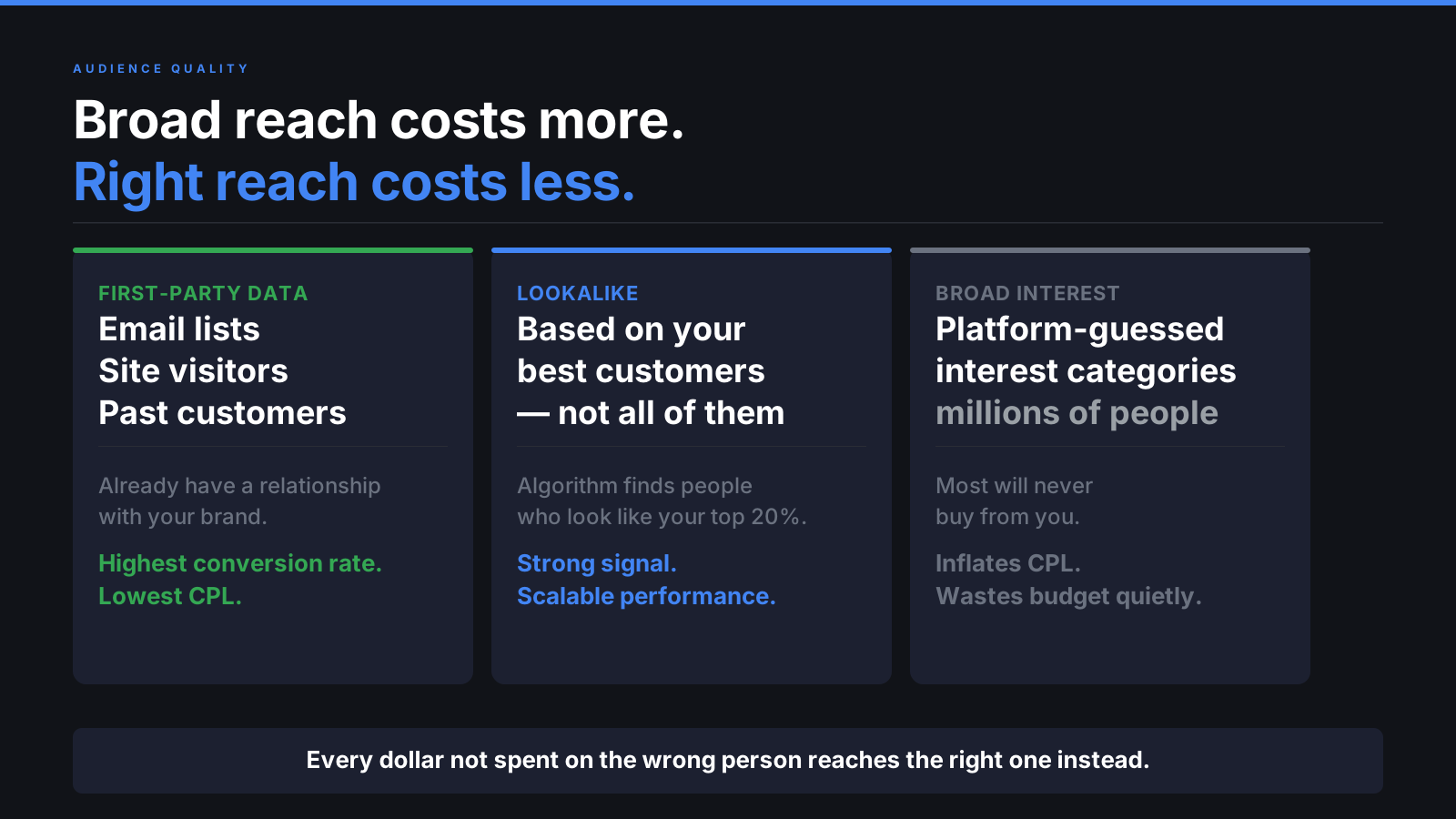
Broad audiences feel safe because the reach numbers look impressive. But reach isn't the metric — cost per qualified lead is. A wide audience full of people who will never buy from you inflates that number significantly, and the platform charges you for every impression regardless.
The audiences that consistently produce lower CPL are built from real signal, not platform-guessed interest categories:
Custom audiences from first-party data — email lists, past customers, site visitors — convert at higher rates because these people already have some relationship with your brand.
Lookalikes built from your best customers, not all customers. The algorithm finds people who look like your top converters, not everyone who ever clicked an ad.
Exclusions. Wrong job titles, low-intent visitors who bounced in under ten seconds, current clients who can't convert again. Every dollar not spent on the wrong person reaches the right one instead.
Your Landing Page Is Probably the Biggest Lever
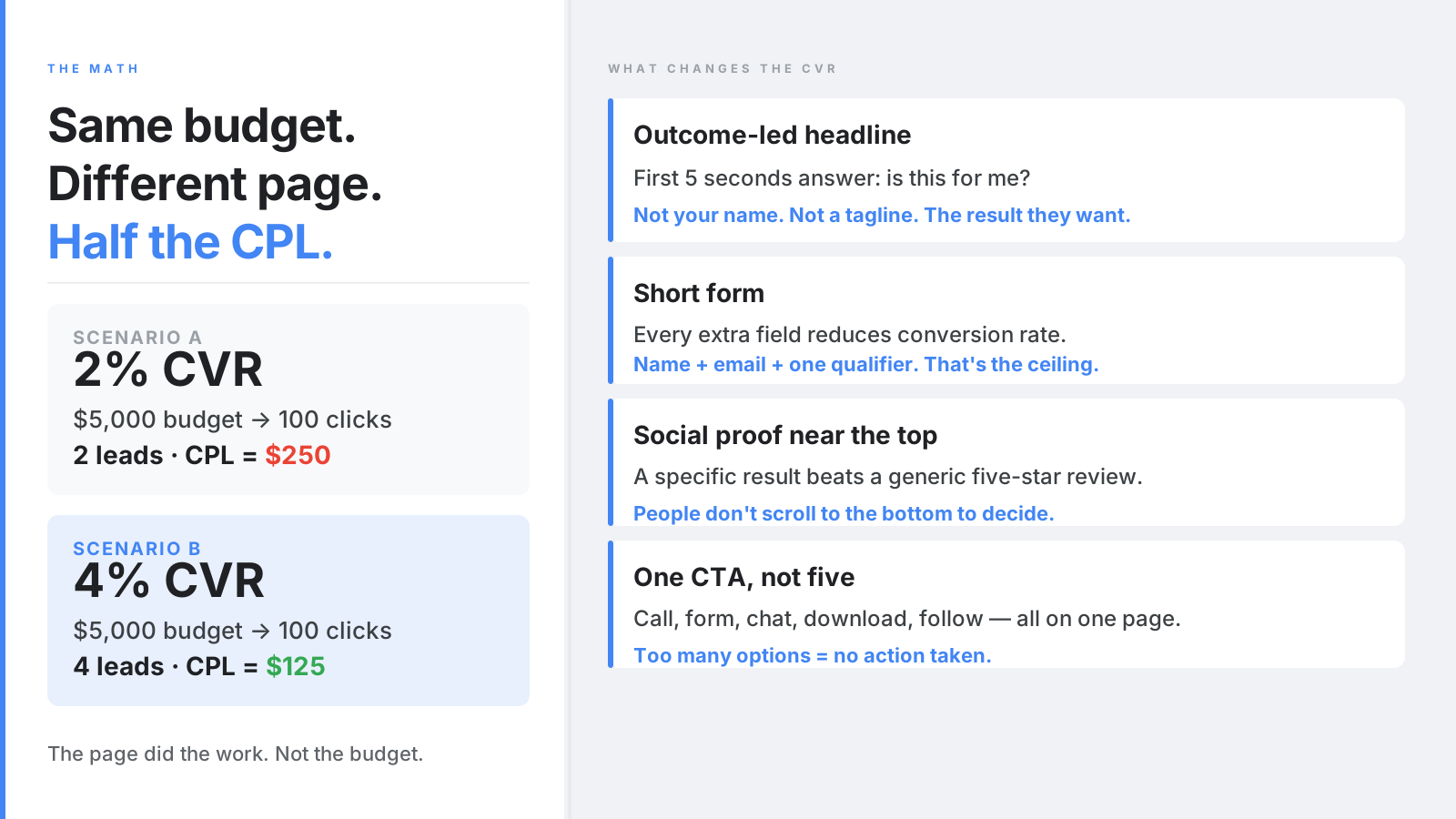
A 1% improvement in landing page conversion rate has the same effect on CPL as cutting your CPC by the same amount — but improving a page costs nothing, while lowering CPC takes weeks. Most businesses obsessively optimise their ads and ignore the page the ad sends people to. That's backwards.
The pages that produce the lowest CPL share a few things: a headline that states a specific outcome rather than who you are, a short form with no unnecessary fields, social proof near the top rather than buried where no one scrolls, and one clear call to action. A page converting at 4% instead of 2% cuts your CPL in half with zero change to ad spend.
Page speed matters more than most businesses expect. Every additional second of load time on mobile reduces conversion rate measurably. No copy optimisation recovers what slow loading destroys before the page even renders.
Campaign Structure and Bidding
Splitting budget across too many campaigns simultaneously is one of the most expensive structural mistakes. Each split reduces the data available per campaign, which means the algorithm makes slower and worse decisions. Fewer campaigns with concentrated budget consistently outperform fragmented structures on CPL — at identical total spend.
On bidding: once you have 30 or more conversions in a 30-day window, switching to Target CPA almost always reduces CPL. The algorithm now has a cost target to optimise toward rather than chasing clicks regardless of quality. The transition requires a learning period of one to two weeks — which is why most businesses abandon it too early and never see the benefit.
Make Sure You're Measuring CPL Correctly
None of the above matters if the number you're optimising toward is wrong.
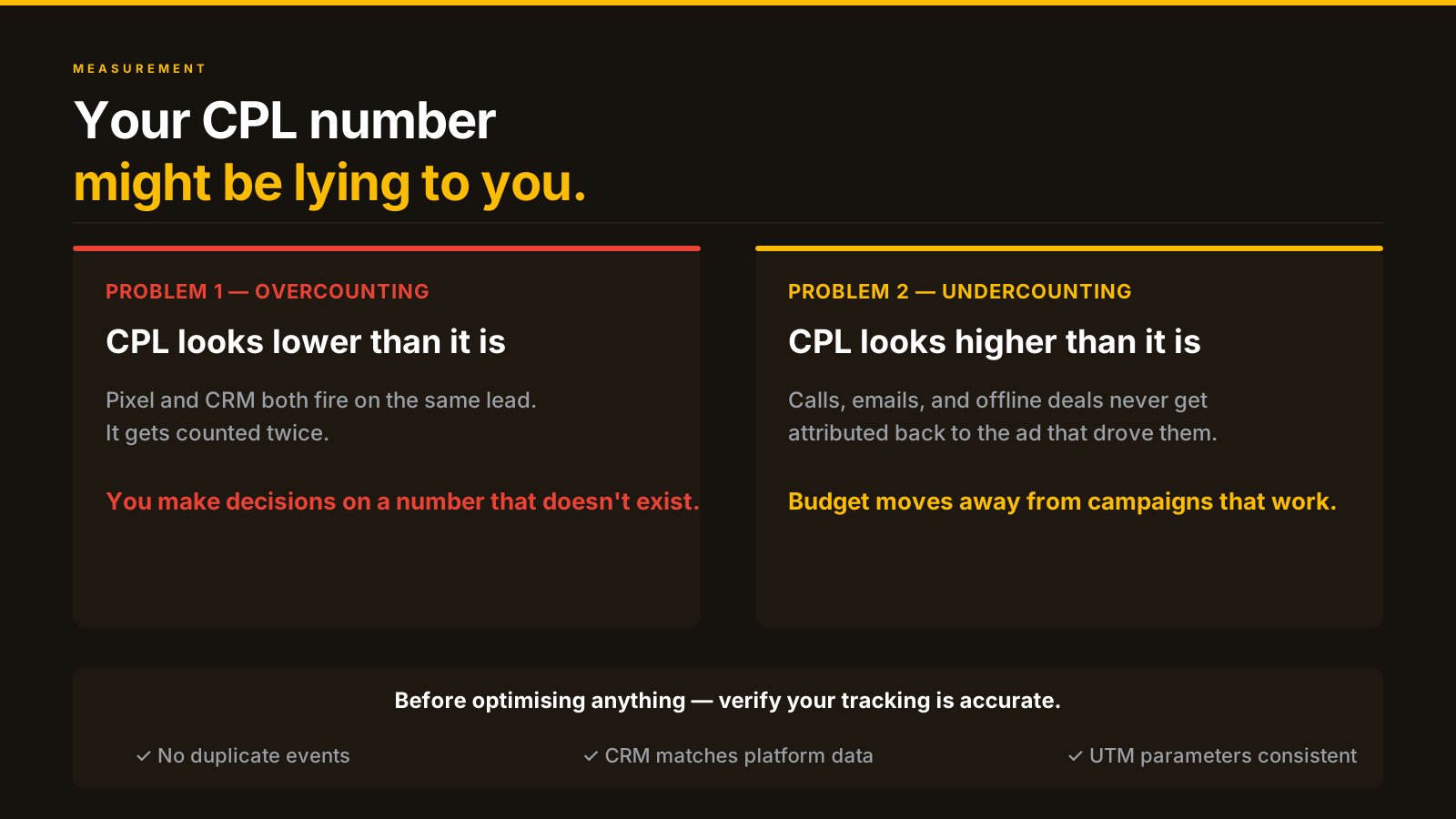
Overcounting happens when the pixel and CRM both fire on the same lead — it gets counted twice and CPL looks better than it is. Undercounting happens when calls, direct emails, and offline deals never get attributed back to the ad that drove them — the campaign that worked looks like it didn't, and budget moves away from it.
Before changing anything: check for duplicate conversion events, confirm your CRM and platform data match, and verify UTM parameters are applied consistently. An accurate CPL — even if it's higher than you expected — gives you something real to improve.
Lower CPL Is a System Problem, Not a Budget Problem
The businesses that consistently maintain low CPL treat lead generation as a system to be optimised, not a budget to be adjusted. They know their conversion rate at each stage. They refresh creative before fatigue compounds into a CPL problem. They audit tracking regularly enough to trust the numbers they act on.
Fix the audience, the landing page, the structure, and the measurement. Do those things first — and the CPL comes down without touching the budget.