
Paid Ads


Mykyta Hryhorenko
CEO & Co-founder
Retargeting Isn't Broken. Your Setup Is
Retargeting has a reputation problem it doesn't deserve. When it underperforms — and it often does — the conclusion most teams reach is that retargeting audiences are saturated, or that the tactic just doesn't work for their product. The actual explanation is almost always structural. The campaign is targeting the wrong people, with the wrong message, at the wrong frequency, and measuring results in a way that makes everything look better than it is.
Retargeting works because intent exists. Someone who visited your product page, watched your video, or added to cart has already shown more interest than anyone in a cold audience. The signal is there. The job of retargeting is to convert that signal into action — and most campaigns fail that job not because the signal was wrong, but because the system built around it was.
The Audience Problem Nobody Fixes
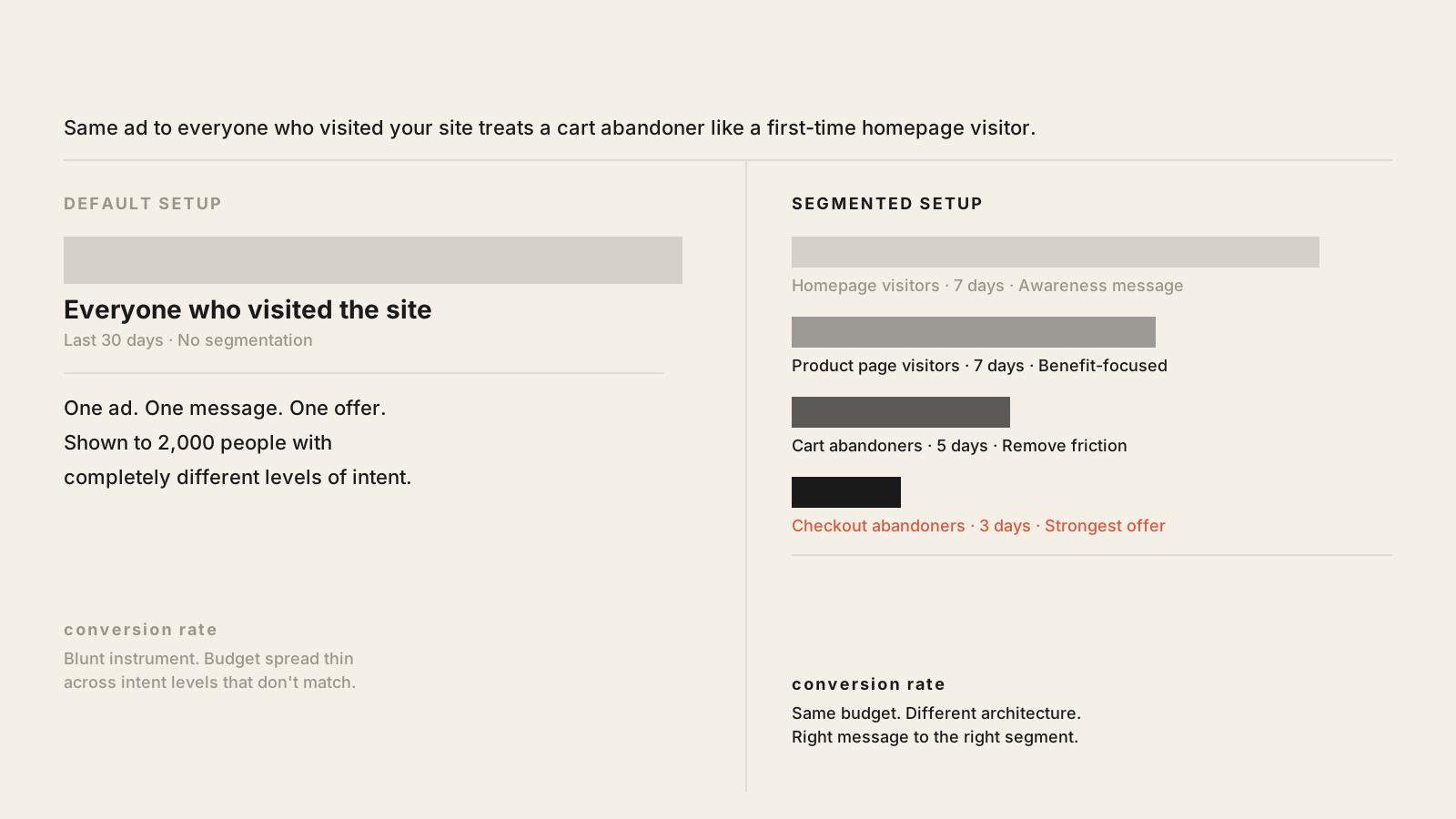
The default retargeting setup is a single audience: everyone who visited the website in the last 30 days. This feels logical — they were on the site, they showed interest — but it treats a first-time homepage visitor the same as someone who spent twelve minutes on the pricing page and abandoned checkout. These are not the same person at the same stage of a decision, and showing them identical ads produces predictably mediocre results.
Effective retargeting starts with segmenting the audience by behaviour and recency:
By behaviour. Product page visitors, cart abandoners, and checkout abandoners are distinct audiences with different levels of intent and different objections. A cart abandoner needs friction removed — a reminder, a guarantee, maybe an incentive. A product page visitor who never added to cart needs more convincing that the product is right for them. The ad that converts one will not convert the other.
By recency. Someone who visited yesterday is a fundamentally different retargeting prospect than someone who visited 25 days ago. Recent visitors are hot. Stale visitors are nearly cold. Bidding the same amount for both, and showing them the same creative, wastes budget on the far end of the window where intent has faded.
By funnel stage. Top-of-funnel retargeting — people who engaged with content or watched a video — requires awareness-building messaging. Bottom-of-funnel retargeting requires conversion-focused messaging. Conflating the two stages into one campaign means neither works well.
You're Showing a Cold Ad to a Warm Audience
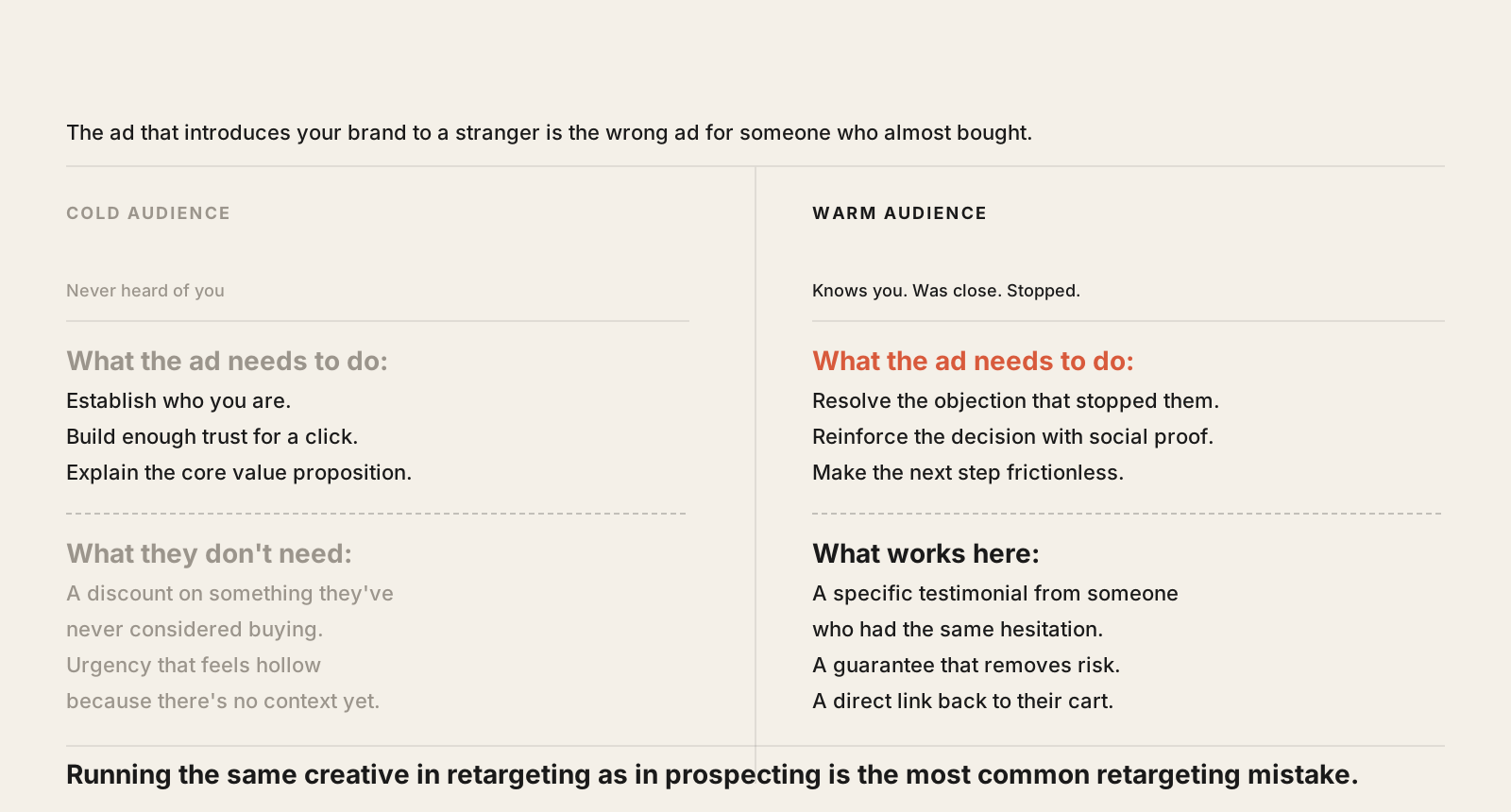
This is the most common and most costly retargeting mistake. The creative running in retargeting campaigns is typically the same creative running in prospecting — or a slight variation of it. The problem is that the message designed to introduce your brand to a stranger is the wrong message for someone who already knows who you are and what you sell.
A cold audience needs to understand what you do and why they should care. A warm audience already has that context. What they need is the thing that resolves whatever stopped them from converting the first time. That might be social proof — testimonials, case studies, specific results. It might be objection handling — addressing the concern that made them hesitate. It might be urgency or a specific offer. It is almost never another version of the same brand awareness message they've already seen.
The creative brief for a retargeting ad should start with one question: why didn't this person convert when they had the chance? The answer to that question determines what the ad needs to say. A brand new visitor and a cart abandoner have different answers to that question, which is why they need different ads.
Frequency Kills What Intent Builds
Retargeting audiences are small. A pool of 2,000 recent website visitors with a daily budget of any meaningful size will see your ads repeatedly — sometimes multiple times a day. At some point, the ad stops being a useful reminder and starts being an annoyance. When that happens, the person who was close to converting doesn't convert — they develop active resistance to the brand.
There is no universal frequency cap that works for every campaign, but the symptoms of fatigue are measurable: falling click-through rate over time, rising cost per conversion, and in some cases negative sentiment signals in comments or direct feedback. The fix is a combination of frequency caps set at the campaign level, creative rotation to reduce the feeling of repetition, and tightening the retargeting window so the audience only includes people whose intent is still relevant.
A 30-day retargeting window made sense when retargeting was simpler. For most products with a short decision cycle — anything where the buying decision happens in a few days rather than a few weeks — a 7 to 14 day window concentrates budget on the highest-intent prospects and naturally reduces the fatigue problem that comes with keeping people in the audience too long.
Why Retargeting Always Looks Profitable in the Dashboard
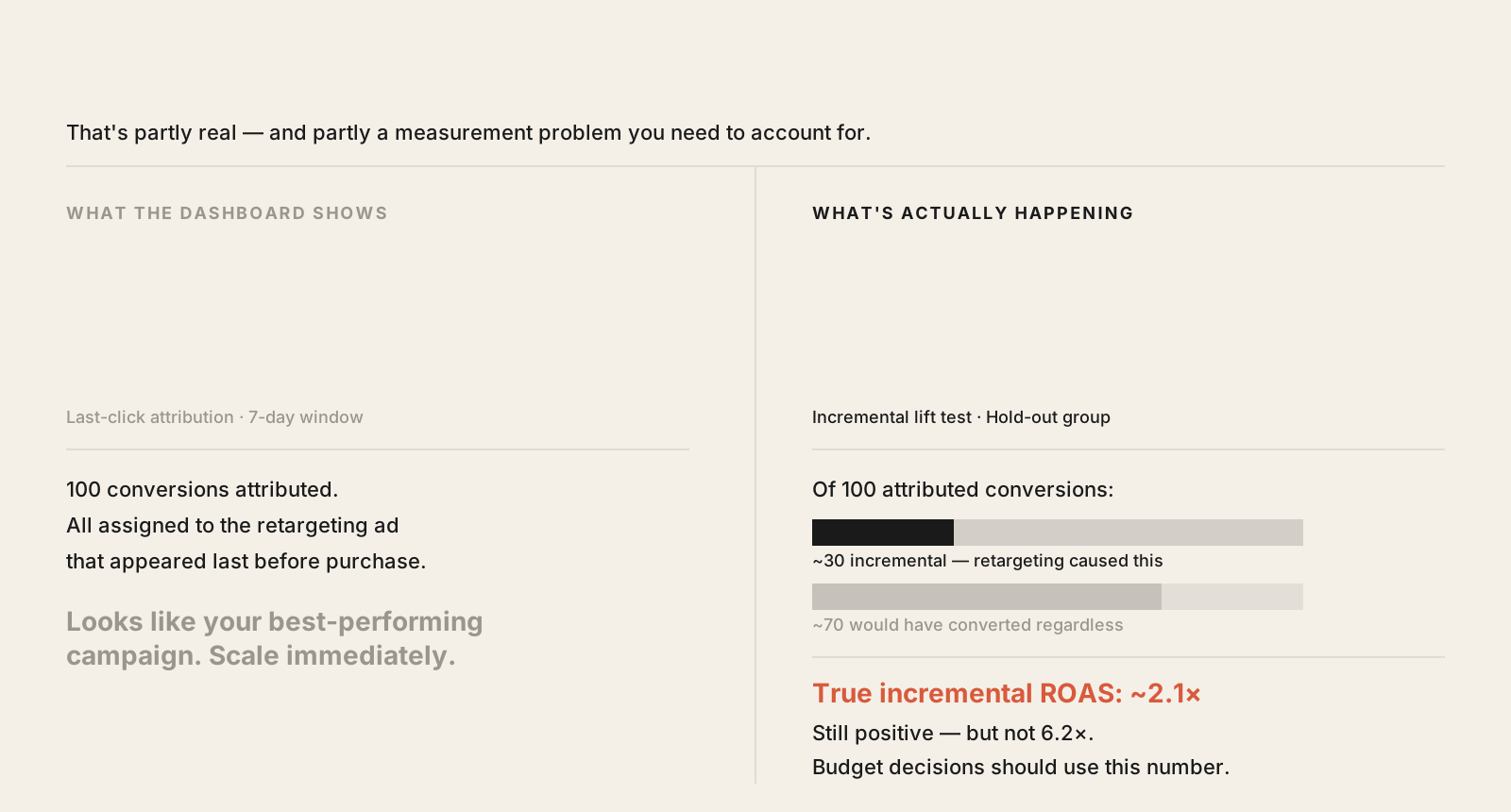
Retargeting campaigns consistently report strong ROAS and low CPL in platform dashboards. Part of this is genuine — warm audiences do convert at higher rates. But a significant portion is a measurement artifact that makes retargeting look better than it actually is.
The core issue is that retargeting campaigns take credit for conversions that would have happened anyway. Someone who decided to buy after seeing your brand three times over two weeks gets attributed to the retargeting ad they saw last — even if the retargeting ad was irrelevant to their decision. Last-click and even 7-day attribution models systematically overstate retargeting performance because they assign credit to the final touchpoint before conversion regardless of whether that touchpoint caused the conversion.
The practical test: pause your retargeting campaign for two weeks and measure whether overall conversion volume drops proportionally. If retargeting was genuinely driving incremental conversions, you'll see a meaningful decline. If conversion volume holds steady, retargeting was mostly taking credit for purchases that were happening regardless. Most teams that run this test are surprised by the result. The honest number is almost always lower than the dashboard suggests — which doesn't mean retargeting has no value, but it does mean decisions about budget allocation should account for attribution inflation.
Retargeting as a System, Not a Campaign
The teams that get consistent results from retargeting don't treat it as a single campaign they turn on and leave running. They treat it as a system with distinct components: segmented audiences built from real behavioural signals, creative tailored to the specific objection each segment has, frequency management to prevent fatigue from undermining intent, and measurement that accounts for attribution bias rather than accepting dashboard numbers at face value.
None of this requires a larger budget. It requires more deliberate architecture. Most retargeting setups fail not because retargeting is hard, but because the default configuration — one audience, one ad, no frequency management, last-click attribution — is too blunt an instrument to do the job retargeting is actually capable of doing.